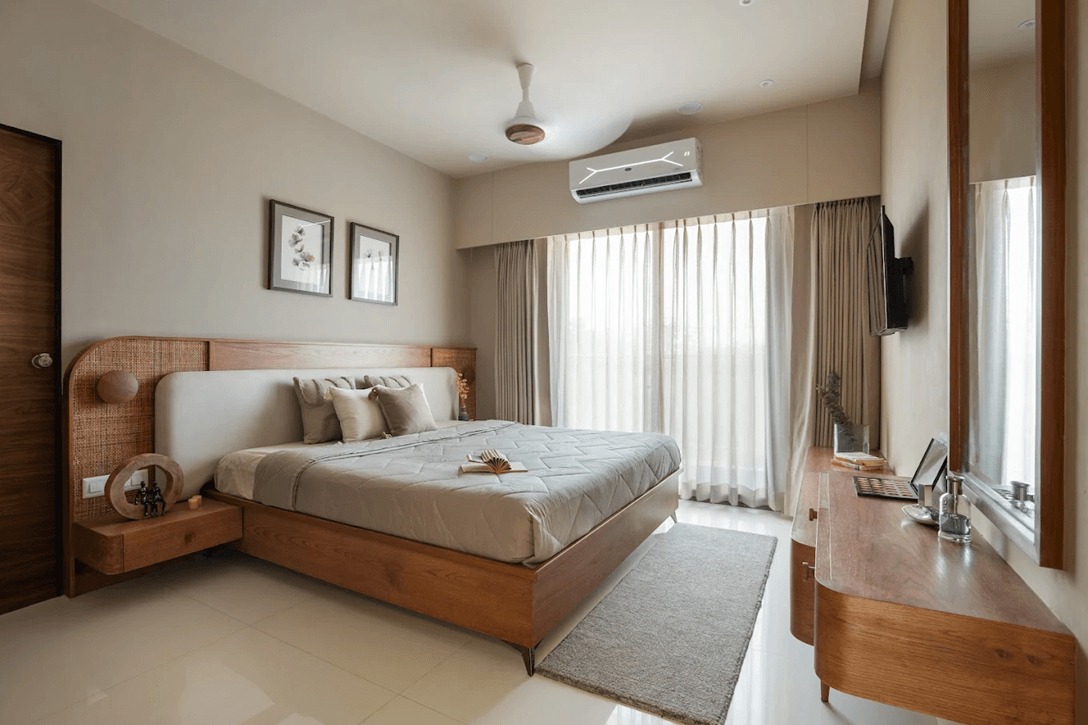
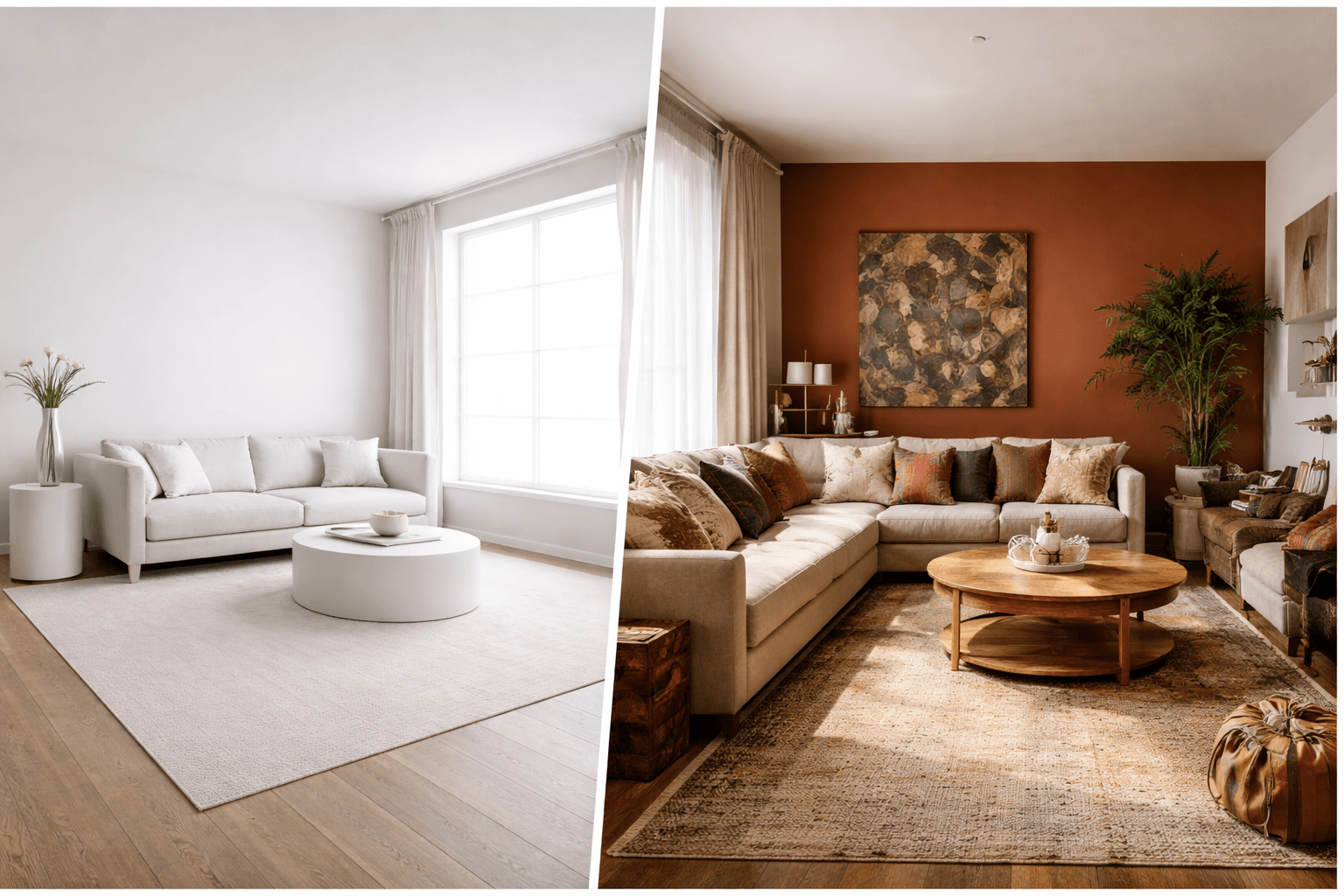
In modern interior design projects, most homeowners first see a 3D interior design preview before the actual work begins. These digital designs help clients visualize how their living space, office, or commercial interior will look after completion.
However, many homeowners are often confused about the difference between a 3D interior design and the final executed interior. While 3D designs provide a realistic preview of the project, the real interior involves actual materials, construction work, and on-site execution.
Understanding how these two stages work helps clients plan their interior project more effectively and set realistic expectations before starting the work.
What is 3D Interior Design?
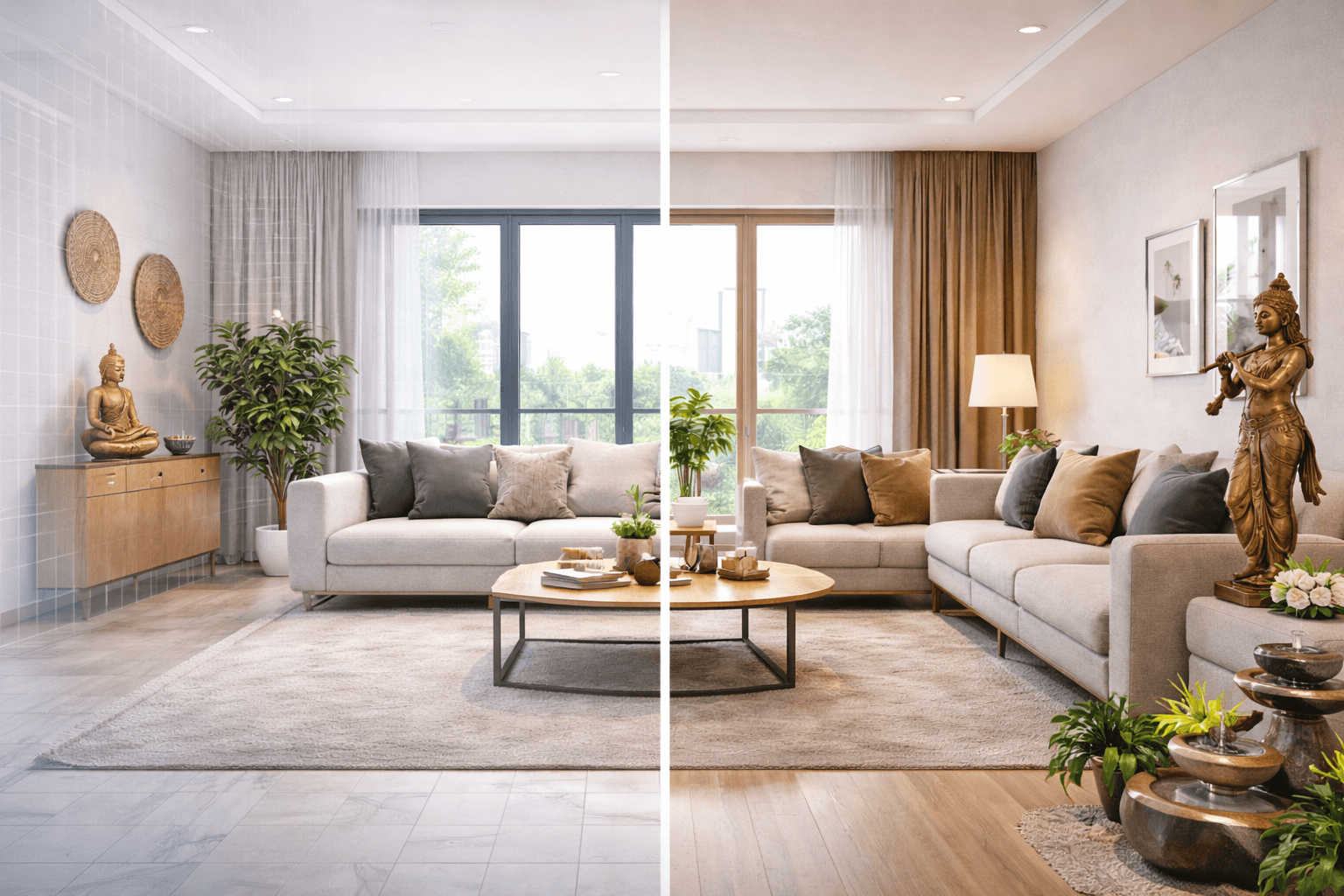
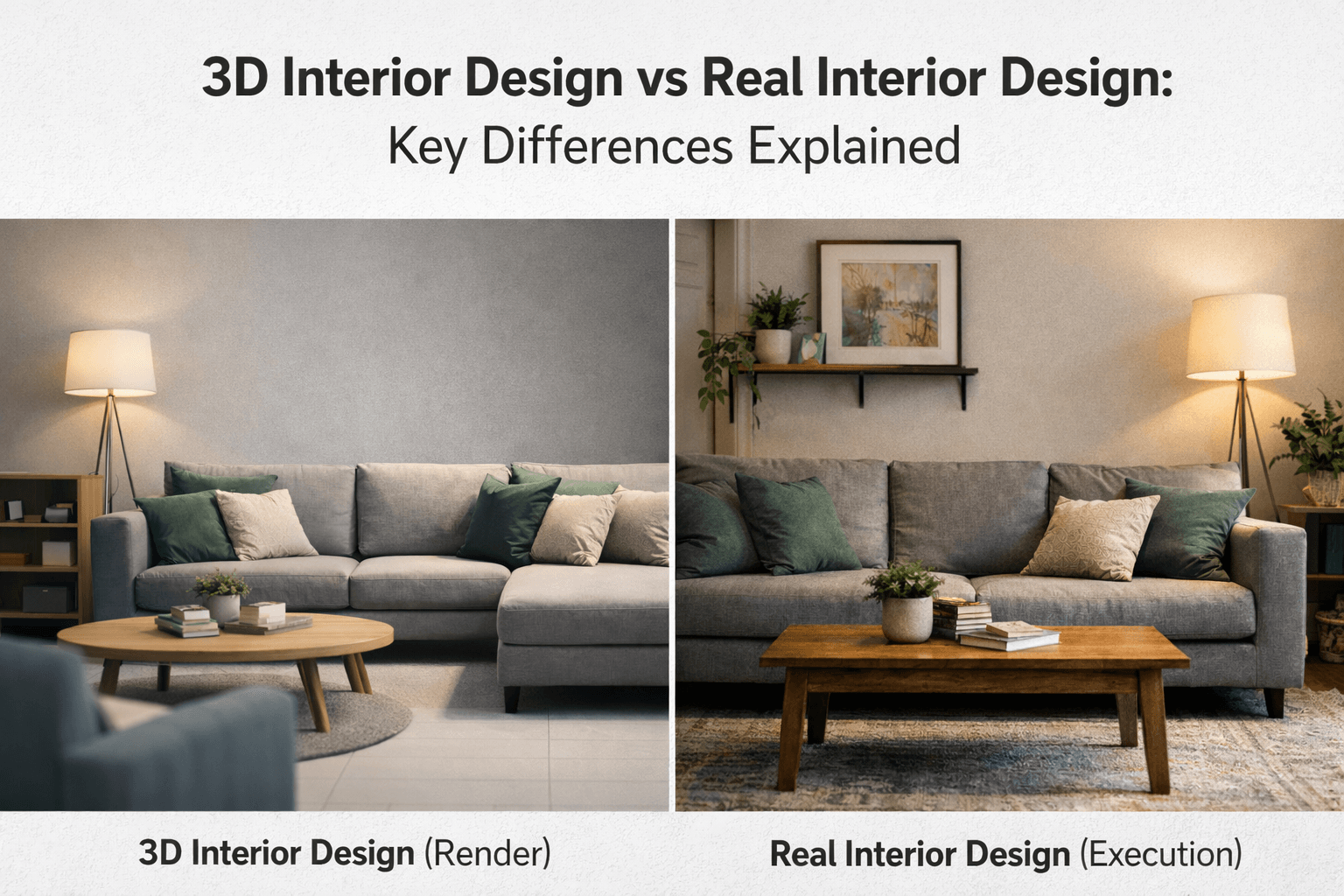
3D interior design is a digital visualization of a space created using professional design software before construction begins. It allows interior designers to present a realistic preview of the project, including furniture layout, lighting effects, colors, textures, and decorative elements.
The goal of a 3D interior design is to help clients clearly understand the overall design concept before the execution phase begins.
Professional interior designers typically use advanced design software such as:
• AutoCAD
• SketchUp
• Autodesk 3ds Max
• V-Ray rendering tools
These tools allow designers to create highly detailed models that simulate the real look and feel of the finished interior.
With modern rendering technology, 3D designs can closely resemble the final interior, making it easier for homeowners to visualize their future space.
Benefits of 3D Interior Design
3D visualization has become an essential part of modern interior design projects because it improves communication between the designer and the client.
Key advantages of 3D interior design include:
Clear Visualization
3D designs help clients understand how the finished interior will look before any construction begins.
Easy Design Modifications
Changes can be made quickly in the digital model without affecting the construction process.
Better Material Selection
Clients can see how different materials, colors, and textures will appear together in the final space.
Improved Planning
Designers can plan furniture placement, lighting layouts, and storage solutions more efficiently.
Reduced Risk of Mistakes
Since the design is finalized digitally, it minimizes errors and costly changes during the execution stage.
For homeowners planning a new apartment or office interior, reviewing the 3D design ensures that the design concept is fully approved before starting the actual work.
What is Real Interior Execution?
Real interior execution refers to the actual construction and installation process where the approved design is physically implemented on site.
This stage transforms the digital design into a real, functional interior space.
The execution phase usually includes:
• Carpentry work and custom furniture manufacturing
• Modular kitchen installation
• Electrical wiring and lighting setup
• False ceiling installation
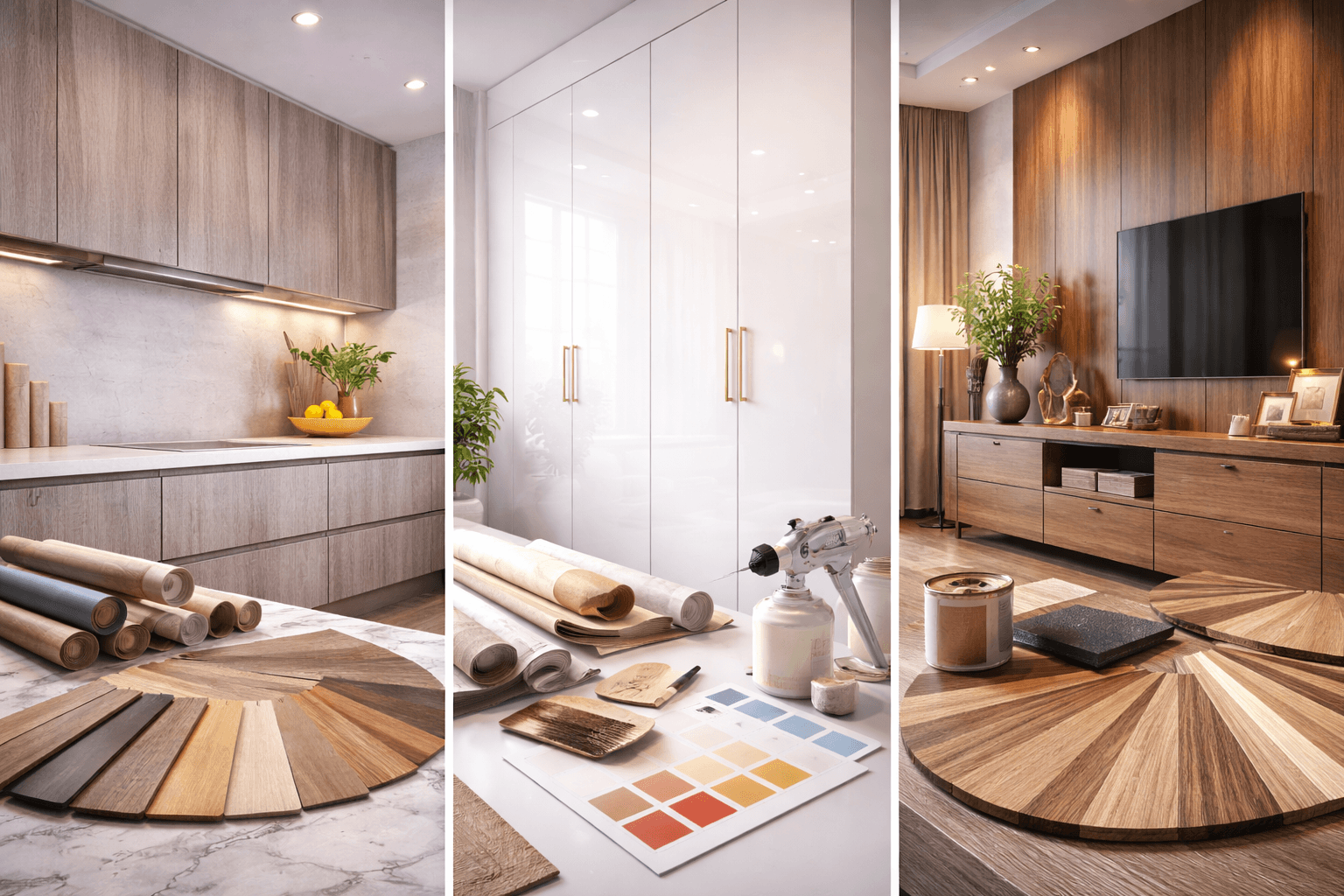
• Painting and wall finishes
• Flooring installation
• Final décor and styling
Unlike digital designs, real interiors involve real materials, skilled craftsmanship, and on-site conditions, which can sometimes influence the final outcome.
Interior execution requires proper coordination between designers, carpenters, electricians, painters, and installation teams to ensure the project is completed according to the approved design.
Key Differences Between 3D Interior Design and Real Interior Execution
| Aspect | 3D Interior Design | Real Interior Execution |
|---|---|---|
| Purpose | Provides a visual preview of the design | Actual implementation of the design |
| Format | Digital model | Physical space |
| Flexibility | Easy to modify | Changes can be expensive |
| Materials | Virtual textures and finishes | Real materials and finishes |
| Time | Created quickly during design stage | Requires weeks of construction work |
While both stages are different, they work together to ensure a successful interior design project.
Why 3D Interior Design is Important Before Interior Work Begins?
Many professional interior designers strongly recommend starting every project with a detailed 3D design.
This step helps homeowners understand exactly how the final space will look before construction begins.
Important benefits include:
Accurate Space Planning
3D visualization helps designers plan furniture placement and room layouts more effectively.
Lighting Visualization
Clients can see how natural and artificial lighting will affect the interior environment.
Material and Color Selection
Different materials, finishes, and color combinations can be tested digitally.
Better Budget Planning
Once the design is finalized, designers can estimate the project cost more accurately.
Reduced Construction Changes
When the design is approved beforehand, the chances of making changes during execution are greatly reduced.
Because of these advantages, most professional interior design companies include 3D visualization as a standard part of the design process.
Why Real Interiors May Look Slightly Different from 3D Designs?
Although 3D designs are highly realistic, the final interior may sometimes look slightly different after execution.
Some factors that can influence the final appearance include:
• Natural lighting variations inside the room
• Differences in material texture and finish
• Site conditions during construction
• Budget adjustments made during the project
However, experienced interior designers ensure that the final executed interior remains very close to the approved 3D design concept.
Good project planning and clear communication between the designer and client help maintain design consistency throughout the project.
How Professional Interior Designers Ensure Accurate Execution?
Experienced interior designers follow a structured process to ensure that the final interior matches the approved 3D design as closely as possible.
This process usually includes:
• Detailed technical drawings and layouts
• Material selection and sample approval
• Regular site inspections
• Skilled craftsmen and installation teams
• Quality checks during each stage of the project
By carefully managing every step of the process, designers ensure that the finished interior reflects the original design vision.
Conclusion
Both 3D interior design and real interior execution are essential stages in a successful interior design project.
3D visualization helps clients clearly understand the design concept, experiment with layouts, and finalize materials before construction begins. On the other hand, real interior execution brings the design to life through actual materials, craftsmanship, and installation work.
For homeowners and businesses planning an interior project, reviewing a detailed 3D design before starting construction ensures better clarity, smoother execution, and more satisfying results.
Frequently Asked Questions (FAQs)
What is 3D interior design?
3D interior design is a digital visualization that shows how a room or space will look after the interior design is completed.
Why do interior designers create 3D designs?
3D designs help clients visualize furniture layout, colors, lighting, and materials before starting the actual interior work.
Is the final interior exactly the same as the 3D design?
In most cases the final interior looks very similar to the 3D design, although minor differences can occur due to materials or lighting conditions.
Which software is commonly used for 3D interior design?
Interior designers often use professional tools like AutoCAD, SketchUp, and Autodesk 3ds Max to create detailed 3D models.
Is 3D interior design necessary before execution?
Yes. 3D visualization helps finalize the design concept, avoid mistakes, and improve communication between the designer and the client.
![Hotel Interior Designer in Ahmedabad [2026 Cost Guide]](https://ahmedabadinteriordesigner.in/wp-content/uploads/2026/03/Hotel-Interior-Designer-in-Ahmedabad.png)