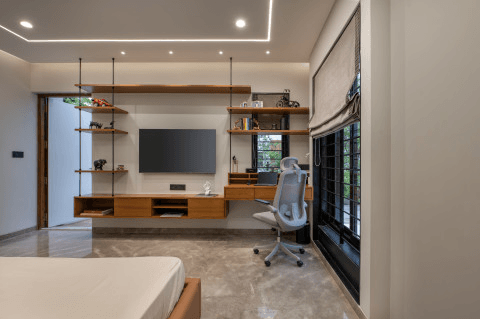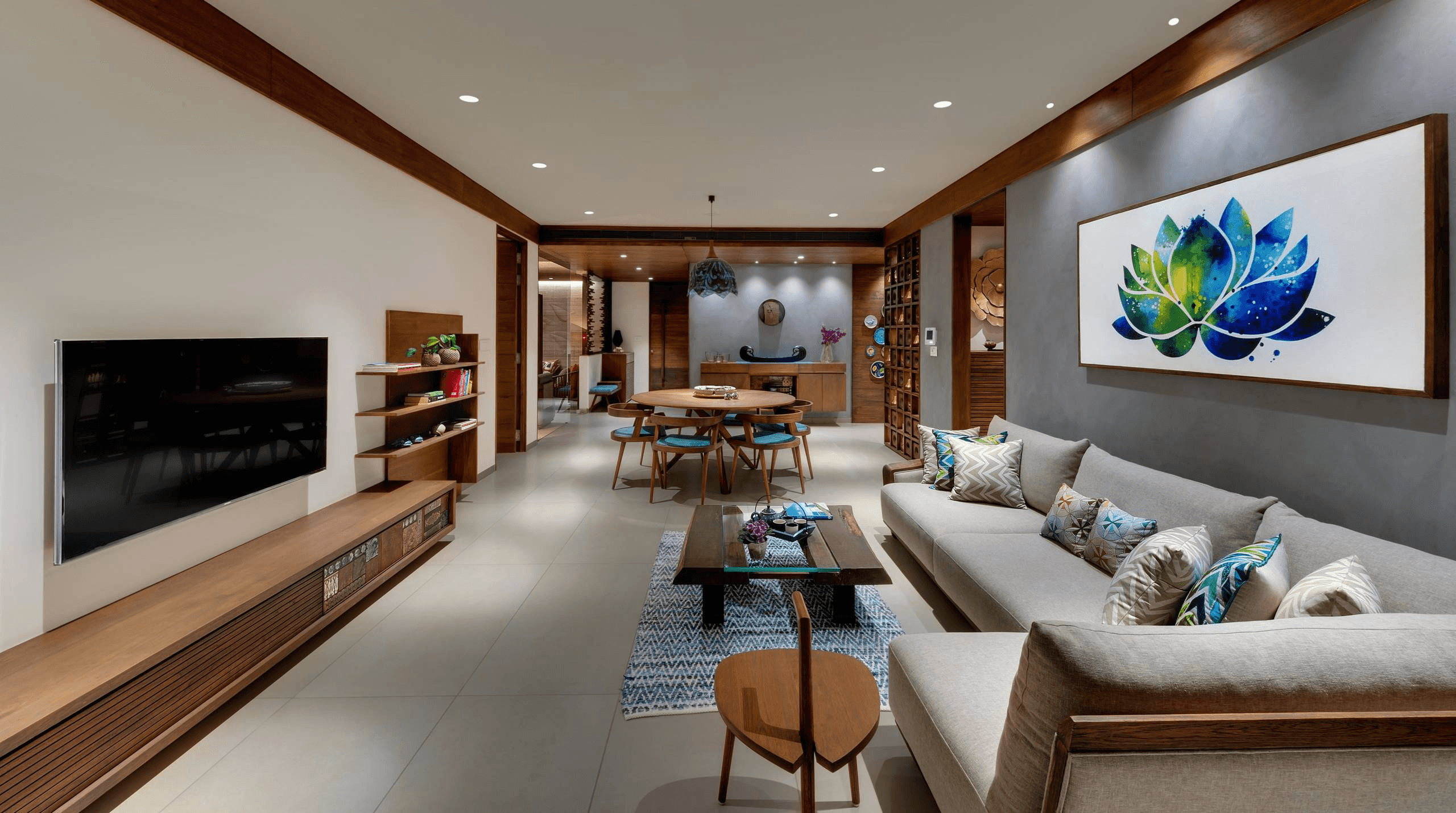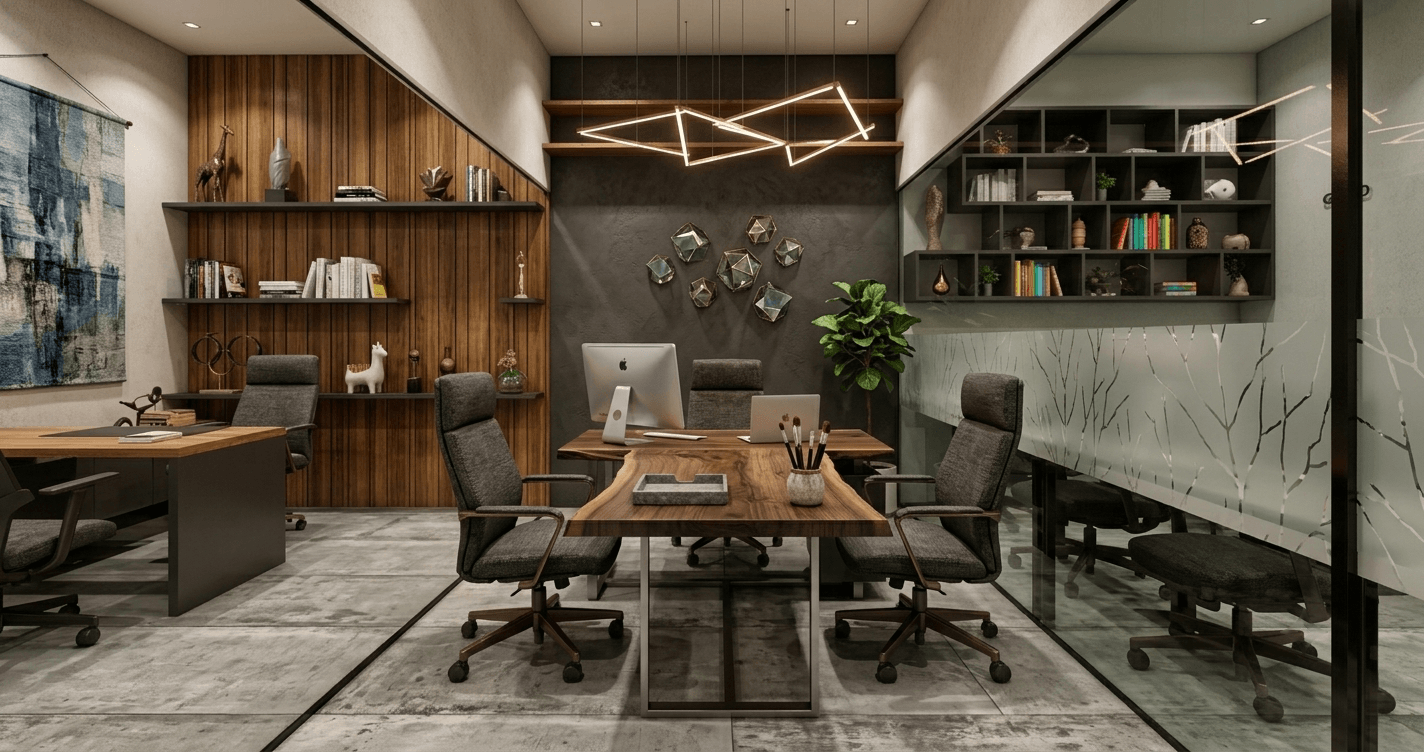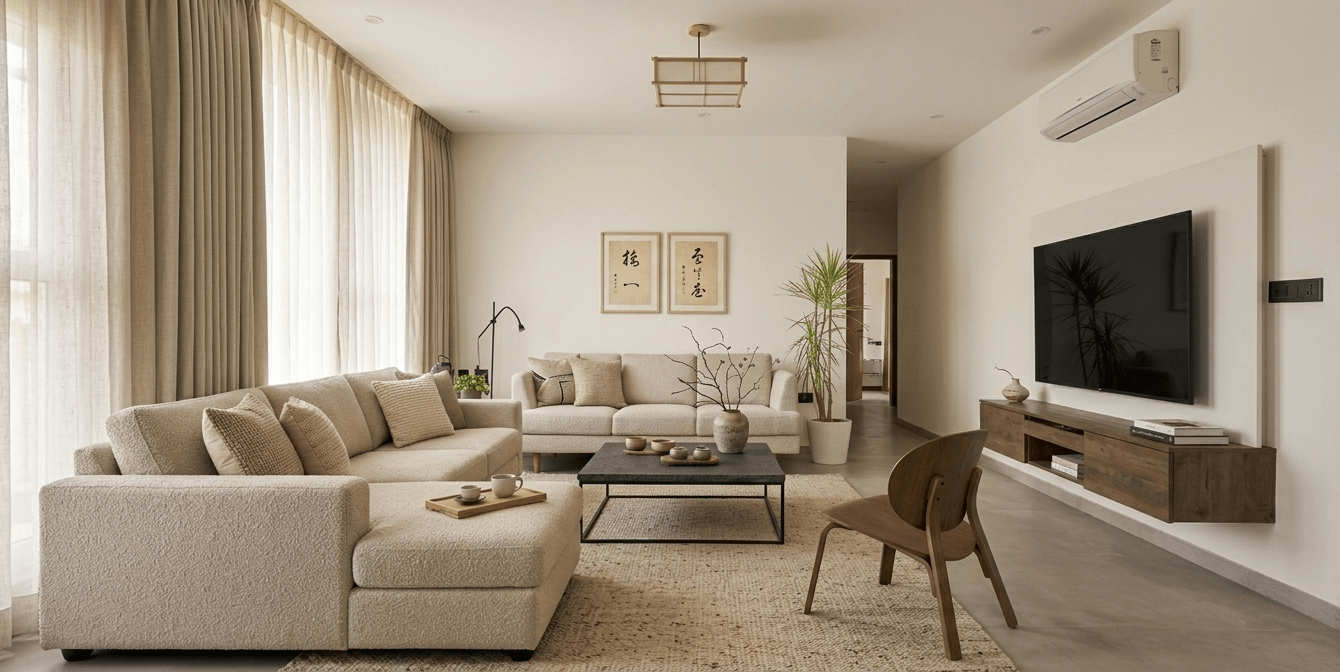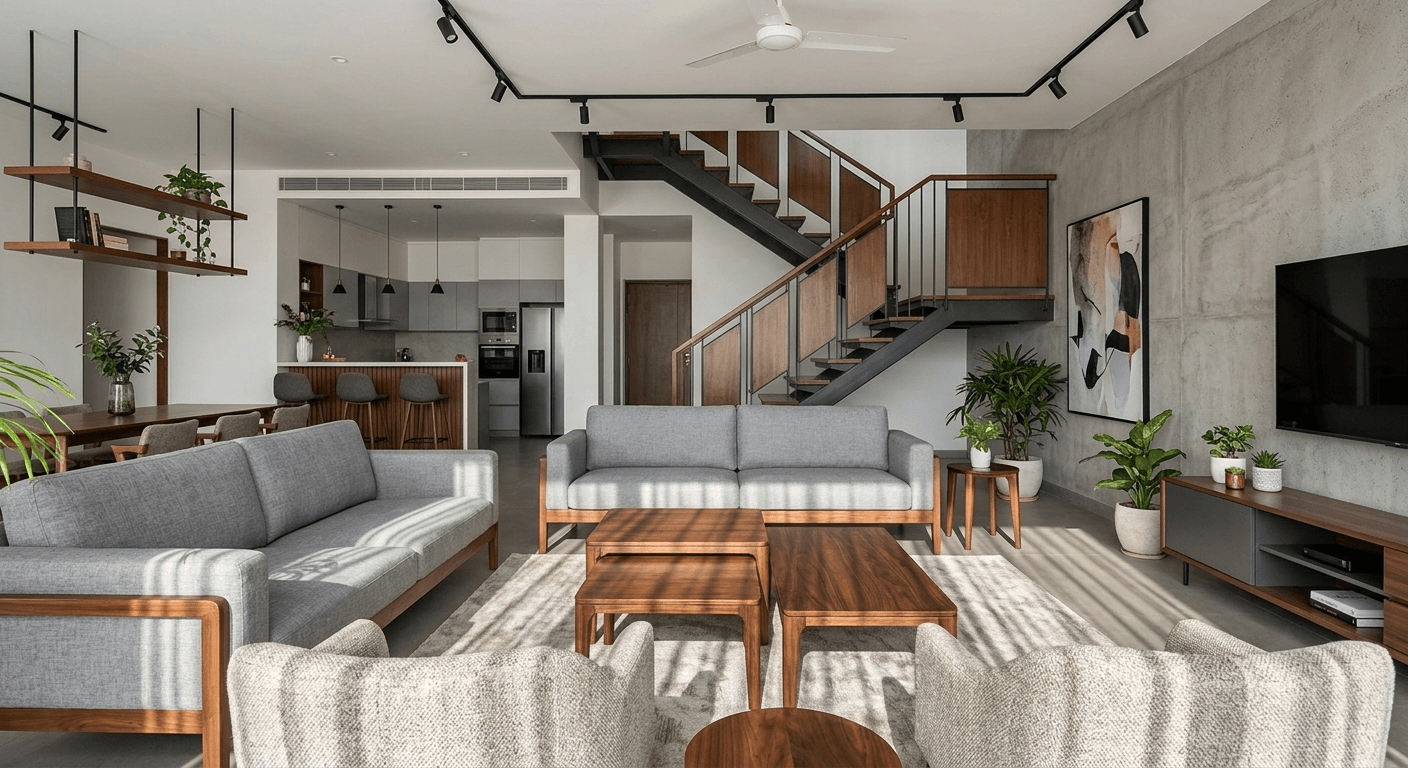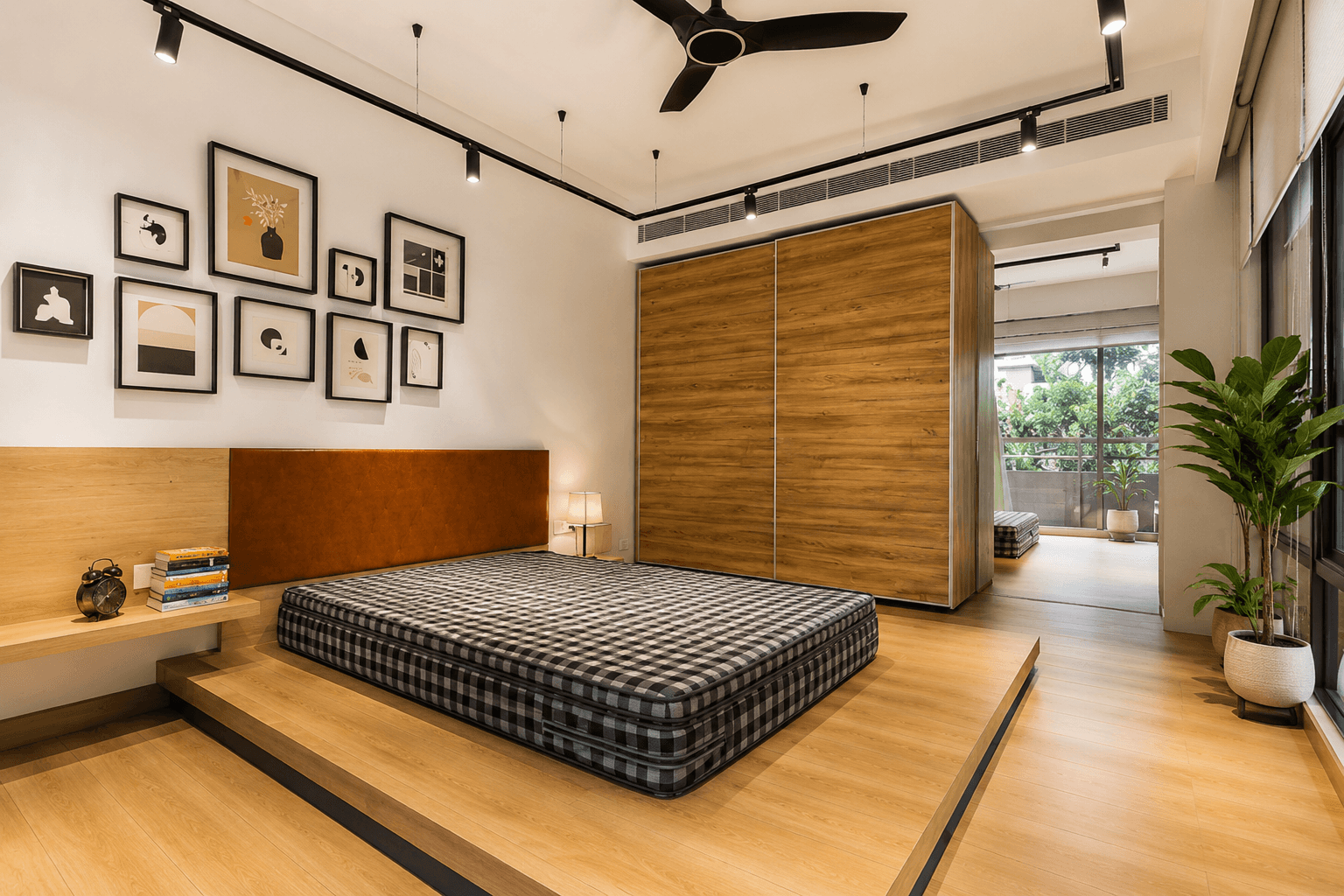
A 3D interior design can make your future home look almost complete before a single piece of furniture is installed. You can see the proposed furniture, colours, wall panels, flooring, false ceiling, lighting, kitchen, wardrobes and overall atmosphere through a photorealistic 3D render.
But an important question remains:
Will the actual interior look exactly like the 3D design?
The short answer is: it can look very close, but a 3D render and a finished interior are not the same thing.
A 3D interior visualization is a digital representation of the proposed space, while actual interior execution involves real materials, workmanship, site conditions, lighting, installation and finishing. The quality of the final result depends on how accurately the approved design is translated into the physical space.
This guide explains the difference between 3D interior design vs actual interior, why renders sometimes look different from reality, what affects the final result, and how homeowners can reduce the gap between 3D render vs reality.
What Is the Difference Between 3D Interior Design and Actual Interior?
The main difference is simple:
3D interior design is the visual plan of your proposed interior, while actual interior execution is the physical implementation of that design.
A 3D interior design visualization allows you to preview:
- Furniture placement
- Room layout
- Wall colours
- Flooring
- Ceiling design
- Lighting
- Modular kitchen
- Wardrobes
- TV units
- Wall panelling
- Curtains
- Decorative elements
- Materials and textures
- Overall colour combinations
Actual interior execution turns these design decisions into a real space through carpentry, electrical work, false ceiling installation, painting, flooring, furniture installation, material procurement and finishing.
Quick comparison: 3D render vs actual interior
| 3D Interior Design | Actual Interior Execution |
|---|---|
| Digital representation | Physical space |
| Created before execution | Created during and after execution |
| Shows proposed materials and finishes | Uses actual materials and finishes |
| Controlled lighting | Real natural and artificial lighting |
| Idealized presentation | Affected by site conditions |
| Easy to modify before execution | Changes can cost additional time and money |
| Helps visualize the final concept | Delivers the finished, usable interior |
| Depends on design accuracy | Depends on design + workmanship + materials + site execution |
A good 3D visualization gives the homeowner a clear target. Proper execution is what turns that target into reality.
What Is 3D Interior Design Visualization?
3D interior design visualization is the process of creating a realistic digital representation of an interior space before physical work begins.
Instead of looking only at a floor plan or mood board, homeowners can see how the proposed interior may look from different viewpoints.
Modern 3D interior rendering can show:
- Furniture proportions
- Wall finishes
- Wood textures
- Marble or stone finishes
- Flooring
- Lighting
- False ceilings
- Kitchen cabinets
- Wardrobes
- Decorative elements
- Colour combinations
- Space planning
- Room proportions
Photorealistic 3D rendering has become an important part of the interior design process because it allows design decisions to be reviewed before materials are ordered or work begins.
Why is 3D interior visualization important?
The biggest advantage is that it reduces guesswork.
A homeowner may have difficulty imagining how a combination of beige walls, wooden panelling, warm lighting and a particular sofa will look together.
A 3D render puts those elements into one visual environment.
This makes it easier to:
- Compare design options
- Understand furniture placement
- Review colours
- Check proportions
- Visualize lighting
- Finalize materials
- Identify design changes early
- Communicate ideas with the designer
- Approve the concept before execution
Changes are generally easier to make during the design stage than after carpentry, painting, electrical or ceiling work has already been completed.
What Is Actual Interior Execution?
Actual interior execution is the process of physically implementing the approved interior design at the project site.
It takes the design concept, drawings, material specifications and approved finishes and converts them into a real home or commercial space.
The interior execution process may include:
- Site measurement and verification
- Detailed space planning
- Working drawings
- Material selection
- Material procurement
- Civil work where required
- Electrical work
- False ceiling work
- Carpentry
- Modular kitchen installation
- Wardrobe installation
- Flooring and wall finishes
- Painting
- Lighting installation
- Hardware installation
- Final finishing
- Cleaning and handover
This is why 3D design alone does not create an interior. The final appearance depends on the complete process from design development to on-site execution.
Why Does a 3D Interior Design Look Different From the Actual Interior?
One of the most common questions homeowners ask is:
“Why does my actual interior look different from the 3D design?”
There are several possible reasons.
1. Lighting Conditions
Lighting is one of the biggest reasons a render can look different from a real room.
A 3D artist can control:
- Light intensity
- Light direction
- Colour temperature
- Shadows
- Reflections
- Ambient lighting
- Daylight conditions
Real interiors are affected by changing sunlight, windows, surrounding buildings, artificial lighting and the actual performance of light fixtures.
The same wall colour can therefore look different in a render, afternoon sunlight and warm evening lighting.
2. Real Materials Have Natural Variations
A 3D rendering uses digital material textures.
Real materials can vary because of:
- Natural stone variation
- Wood grain
- Veneer patterns
- Laminate batches
- Marble veining
- Surface reflection
- Paint finish
- Fabric texture
- Tile shade variation
Even when the selected material is correct, the physical finish can look slightly different under real lighting.
That is why material samples should be reviewed before final approval.
3. Camera Perspective Can Change the Appearance
A 3D render is viewed through a virtual camera.
The camera height, lens, field of view and viewing angle can make a room appear:
- Larger
- Wider
- Taller
- Deeper
- Brighter
- More dramatic
A real photograph taken from a different position may therefore look different even when the interior has been executed correctly.
Perspective is one of the important factors behind the difference between a 3D render and reality.
4. Site Conditions Can Affect Execution
A 3D design is usually created based on available drawings, measurements and design assumptions.
The actual site may reveal conditions that require adjustments.
For example:
- Existing walls may not be perfectly straight
- Electrical points may differ from drawings
- Beams or columns may affect furniture
- Ceiling heights may vary
- Plumbing positions may restrict layouts
- Existing flooring may affect levels
- Society rules may restrict certain work
- Structural conditions may require design modifications
Professional site measurement and verification can significantly reduce these surprises.
5. Workmanship Matters
The same 3D design can produce different results depending on execution quality.
Workmanship affects:
- Panel alignment
- Edge finishing
- Joinery
- Gaps
- Hardware installation
- Laminate application
- Paint quality
- False ceiling detailing
- Electrical installation
- Furniture proportions
This is why choosing an interior designer or interior design company that can manage execution is important when you want the finished space to closely follow the approved design.
6. Budget Changes Can Modify the Design
Sometimes a homeowner approves a 3D design but later changes the material or specification because of budget.
For example:
3D design: Premium natural stone
Actual execution: Budget-friendly marble-look tile
Or:
3D design: Premium veneer
Actual execution: Decorative laminate
Both may look attractive, but they will not produce exactly the same appearance.
Budget revisions during execution are therefore another reason for differences between a render and the finished interior.
Does a 3D Interior Design Show the Exact Final Result?
Not necessarily.
A 3D render should be treated as a highly detailed visual representation of the proposed design, not a guarantee that every pixel will look identical in the finished room.
However, the accuracy can be improved considerably when the visualization is based on:
- Accurate site measurements
- Correct room dimensions
- Finalized furniture sizes
- Actual material specifications
- Correct colour references
- Approved lighting fixtures
- Detailed working drawings
- Clear execution specifications
- Proper site supervision
The closer the design documentation is to the actual project conditions, the easier it becomes to reproduce the intended result.
3D Render vs Reality: What Should Match?
A good interior execution should aim to maintain consistency in the important design elements.
Layout
Furniture and major built-in elements should follow the approved spatial plan.
Proportions
TV units, wardrobes, beds, sofas, kitchen cabinets and other furniture should be designed according to actual site dimensions.
Materials
The selected laminate, veneer, stone, tiles, paint and other finishes should correspond to the approved specifications.
Colours
The final colours should be selected with consideration for actual material samples and lighting.
Lighting
The location and type of major light fixtures should follow the approved lighting plan.
Design Details
Important features such as:
- Wall panelling
- Fluted panels
- TV units
- False ceilings
- Niches
- Storage units
- Kitchen layouts
- Wardrobe shutters
should be executed according to the approved drawings and specifications.
3D Interior Design vs Actual Interior: Which Is More Important?
This is not really an either-or choice.
3D visualization and actual execution perform different jobs.
3D interior design helps answer:
“What will my space look like?”
Execution answers:
“Can this design be built properly in my actual space?”
A beautiful render without practical execution can remain only a concept.
Similarly, good execution without proper visualization can lead to misunderstandings about the final appearance.
The strongest workflow connects both.
How 3D Visualization Helps During Interior Execution
A detailed 3D interior design can act as a visual reference for the execution team.
For example, a living room render can communicate:
- TV wall proportions
- Sofa placement
- Ceiling design
- Lighting positions
- Wall colour
- Flooring
- Decorative panels
- Storage requirements
The execution team can then use the visualization alongside technical drawings, measurements and material specifications.
This creates a clearer connection between interior design planning and actual execution.
How to Make Your Actual Interior Match the 3D Design
If you want your completed home to look as close as possible to the approved 3D design, follow these steps.
1. Take Accurate Site Measurements
Do not create the final design based only on approximate room dimensions.
Verify:
- Wall lengths
- Ceiling height
- Door positions
- Window positions
- Columns
- Beams
- Electrical points
- Plumbing points
- Existing architectural elements
2. Finalize Materials Before Execution
Do not change major materials after the render has been approved unless the visualization is updated.
Finalize:
- Laminates
- Veneers
- Paint
- Flooring
- Tiles
- Stone
- Glass
- Fabrics
- Hardware
- Lighting fixtures
3. Use Actual Material References
Where possible, compare physical samples with the 3D visualization.
This is especially important for:
- Wood finishes
- Marble
- Stone
- Fabric
- Metallic finishes
- Paint colours
- High-gloss surfaces
4. Approve Detailed Drawings
A 3D render shows the design visually, but execution also requires technical information.
Depending on the project, drawings may include:
- Furniture layouts
- Electrical layouts
- Ceiling layouts
- Lighting layouts
- Flooring layouts
- Kitchen drawings
- Wardrobe drawings
- Wall elevations
- Joinery details
Detailed drawings reduce ambiguity during execution.
5. Keep the Execution Team Aligned
The designer, site team, carpenters, electricians and other workers should work from the same approved design and specifications.
Multiple changes communicated informally can create inconsistencies.
6. Conduct Regular Site Checks
Regular site supervision helps identify deviations before they become difficult or expensive to correct.
Check important elements such as:
- Ceiling levels
- Electrical points
- Furniture dimensions
- Panel alignment
- Material installation
- Lighting positions
- Paint colours
- Hardware
- Finishing quality
3D Interior Design Workflow: From Render to Reality
A professional interior project generally follows a sequence similar to this:
Step 1: Requirement Discussion
The designer understands the homeowner’s lifestyle, requirements, preferred style and budget.
Step 2: Site Measurement
The existing space is measured and documented.
Step 3: Space Planning
Furniture, circulation, storage and functional requirements are planned.
Step 4: Design Concept
Colours, materials, furniture styles and overall design direction are established.
Step 5: 3D Interior Visualization
Photorealistic 3D views are created to demonstrate the proposed interior.
Step 6: Design Approval
The homeowner reviews and approves the design.
Step 7: Material Finalization
Actual finishes, hardware, lighting and other specifications are finalized.
Step 8: Working Drawings
Detailed technical drawings are prepared for execution.
Step 9: Interior Execution
Carpentry, electrical, false ceiling, painting, installation and other work begins.
Step 10: Quality Checks
The site team checks workmanship, dimensions, finishes and design alignment.
Step 11: Final Handover
The completed interior is cleaned, inspected and handed over.
This connection between 3D interior visualization and execution is what helps transform a concept into a finished space.
Examples of 3D Render vs Actual Interior
Living Room
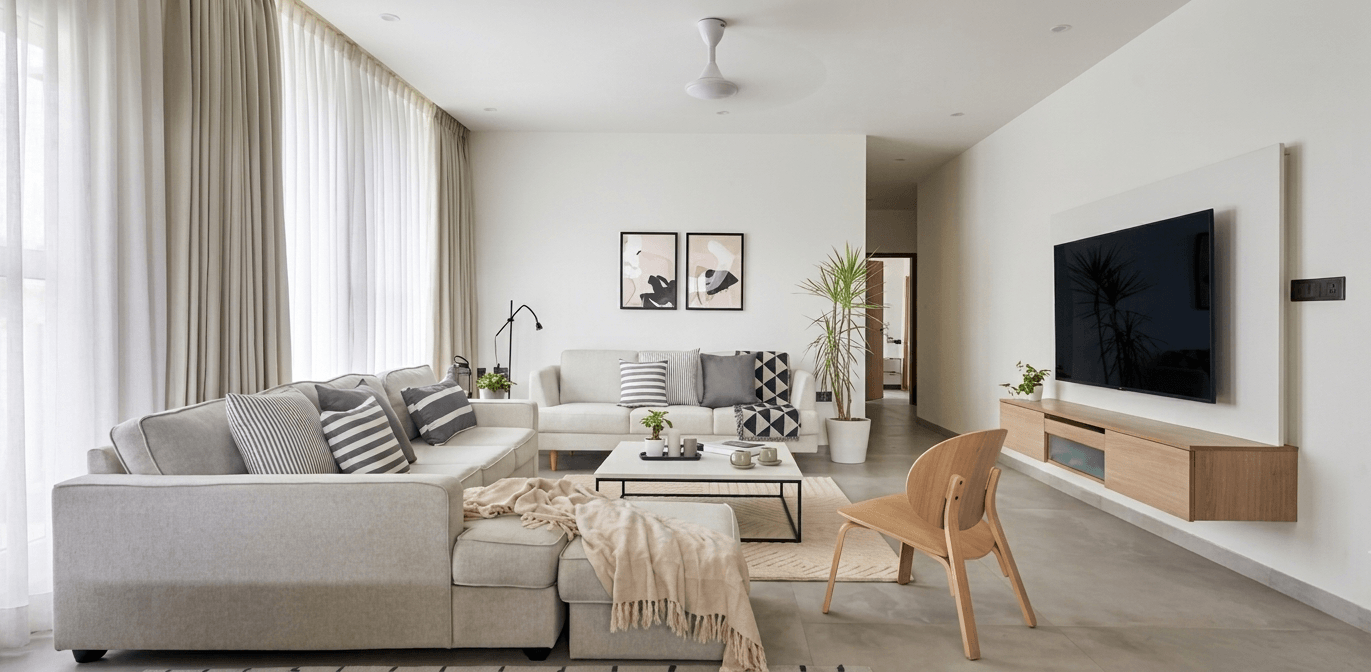
A 3D render may show:
- A floating TV unit
- Fluted wall panelling
- Beige sofa
- Wooden flooring
- Warm cove lighting
- Decorative lighting
During execution, the same concept needs to be translated into correct panel dimensions, electrical positions, material selections and actual lighting.
Bedroom
The 3D design may show:
- Upholstered bed
- Wooden headboard
- Side tables
- Wardrobe
- Cove lighting
- Accent wall
- Soft neutral colours
The finished bedroom can closely follow the render when the dimensions, materials, lighting and furniture specifications are properly coordinated.
Modular Kitchen
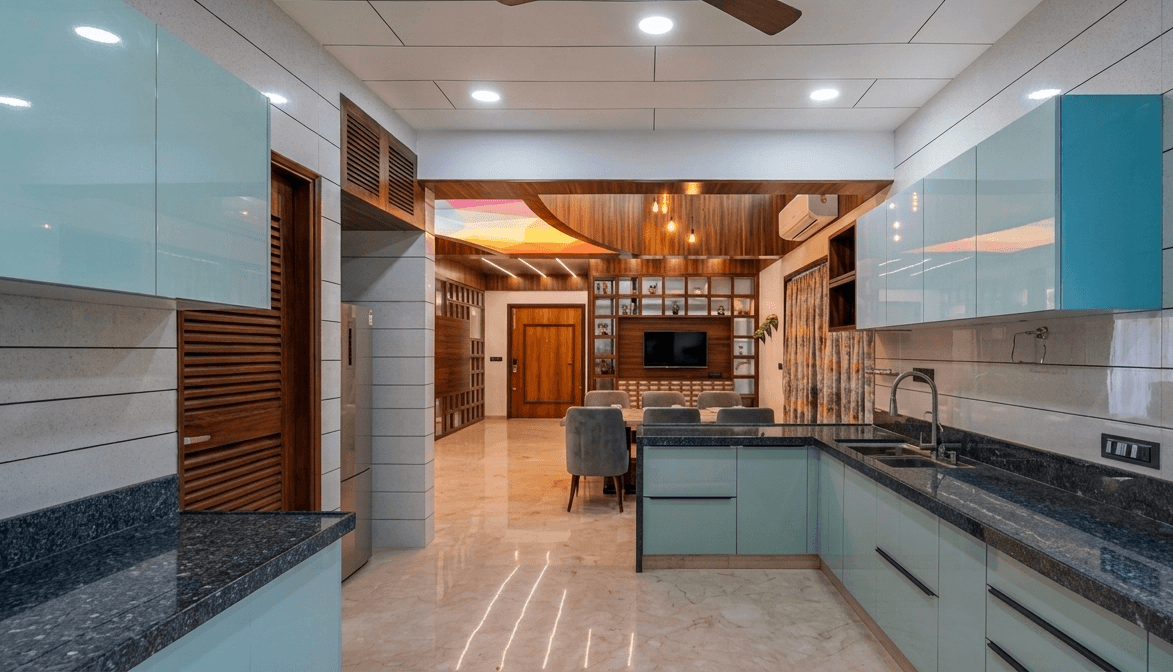
A 3D kitchen visualization can show:
- Cabinet colours
- Countertop
- Backsplash
- Tall units
- Overhead storage
- Appliances
- Island or breakfast counter
- Under-cabinet lighting
Actual execution must additionally consider plumbing, electrical points, appliance dimensions, hardware, cabinet construction and site measurements.
Common Mistakes That Create a Gap Between Render and Reality
Avoid these mistakes if you want a better render-to-reality result.
Choosing a designer based only on beautiful renders
A beautiful portfolio does not automatically demonstrate execution capability.
Look for evidence of completed projects and actual site work.
Changing materials after approval
Changing materials without updating the design can create visible differences.
Ignoring site measurements
Even a small dimensional error can affect built-in furniture and space planning.
Using unrealistic renders
Some renders are created primarily for visual impact rather than construction accuracy.
A useful interior visualization should consider real dimensions, practical materials and feasible construction.
Not checking lighting
Lighting can dramatically change the appearance of colours, textures and surfaces.
Poor site supervision
Even a well-designed project can lose consistency if execution is not monitored.
3D Interior Visualization vs Interior Execution: Pros and Cons
Advantages of 3D Interior Visualization
- Makes the concept easier to understand
- Helps visualize the final space
- Allows design changes before execution
- Improves communication
- Helps compare colours and materials
- Supports furniture planning
- Helps review lighting concepts
- Creates a visual reference for execution
Limitations of 3D Interior Visualization
- It is not the physical space
- Materials may look different under real lighting
- Final workmanship cannot be fully represented
- Site conditions can require modifications
- Budget changes can affect specifications
- Renders can sometimes be more idealized than reality
Advantages of Professional Interior Execution
- Converts the design into a usable space
- Uses real materials and finishes
- Resolves site-specific problems
- Provides functional and durable construction
- Allows quality checks during installation
- Delivers the final physical result
Challenges of Interior Execution
- Dependent on workmanship
- Affected by site conditions
- Requires coordination
- Material availability can affect timelines
- Design changes after execution begins can increase cost or delay
Is 3D Interior Design Worth It?
For homeowners planning a complete interior, 3D visualization can be extremely useful because it gives you an opportunity to review important design decisions before physical execution begins.
It is particularly useful for:
- 3BHK interiors
- 4BHK interiors
- Villas
- Bungalows
- Luxury homes
- Modular kitchens
- Wardrobes
- Living rooms
- Bedrooms
- Office interiors
- Commercial interiors
- Renovation projects
Instead of trying to imagine the final result from a floor plan alone, you can review a visual representation before committing to many physical design decisions.
What Should You Ask Your Interior Designer Before Approving a 3D Design?
Before approving your interior design, ask:
- Is the 3D design based on actual site measurements?
- Are the materials shown in the render available?
- Are the same materials included in the quotation?
- Will the lighting specification match the render?
- Are furniture dimensions finalized?
- Are working drawings included?
- Who will supervise execution?
- Who will coordinate carpentry and electrical work?
- What happens if site conditions require a design change?
- Can I see completed projects that match their 3D designs?
These questions can help you understand whether the design process is connected to actual execution.
3D Interior Design and Execution in Ahmedabad
For homeowners planning interiors in Ahmedabad, the difference between 3D interior design and actual execution is especially important when planning a complete home interior.
A professional workflow should connect:
Site measurement → Space planning → 3D visualization → Material selection → Working drawings → Execution → Quality check → Handover
For projects in areas such as Bopal, South Bopal, SG Highway, Prahlad Nagar, Gota, Satellite, Ambli, Bodakdev, Chandkheda, Thaltej and Science City, site-specific conditions can influence how a design is ultimately executed.
When comparing interior designers in Ahmedabad, don’t look only at 3D renders. Also review completed projects, execution capabilities, material specifications, workmanship and how the designer manages the project from design through handover.
How Ahmedabad Interior Designer Bridges the Gap Between Design and Reality
At Ahmedabad Interior Designer, the objective is to connect the design stage with actual on-site execution.
Our interior design process can include:
- Space planning
- 3D interior visualization
- Material selection
- Modular kitchen design
- Wardrobe design
- False ceiling
- Electrical work
- Carpentry
- Painting
- Final finishing
- Site execution
The benefit of an end-to-end approach is that the design and execution stages remain connected rather than being treated as completely separate processes.
With 150+ home and office interior projects across Ahmedabad and Gujarat since 2023, the focus is on creating designs that are not only visually appealing but also practical to execute.
For homeowners, the goal is simple:
See the design. Approve the details. Build it properly.
Frequently Asked Questions
Is 3D interior design the same as actual interior design?
No. 3D interior design is a digital visualization of a proposed space, while actual interior design execution involves physically constructing and installing the planned elements.
Is 3D interior visualization accurate?
A well-prepared 3D visualization can provide a detailed representation of the proposed interior, but the finished space can still vary because of lighting, materials, workmanship, site conditions and design changes.
Why does my interior look different from the 3D render?
Common reasons include differences in lighting, material texture, camera perspective, site dimensions, workmanship and material substitutions.
Can a 3D render exactly match the final interior?
It is possible to achieve a very close visual match when the render is based on accurate site measurements, finalized materials, correct specifications and detailed execution drawings. However, an exact pixel-for-pixel match should not be expected.
Does a 3D interior design include actual materials?
A 3D render can represent the proposed materials and finishes, but you should confirm the exact physical material, brand, finish, colour and specification before execution.
Can I change my interior design after seeing the 3D render?
Yes. One of the major benefits of 3D visualization is that you can identify and discuss design changes before physical execution begins.
What is better: 3D interior design or actual execution?
They serve different purposes. 3D visualization helps you understand and approve the proposed design, while execution turns the approved design into a physical space. Both are important for a successful interior project.
Does 3D visualization reduce interior execution mistakes?
It can help reduce misunderstandings by providing a clear visual reference before work begins. Its effectiveness is greater when it is supported by accurate measurements, technical drawings and finalized material specifications.
How do I make my home look like the 3D design?
Use accurate site measurements, finalize materials before execution, approve detailed drawings, maintain consistent specifications and ensure regular site supervision.
What is the difference between 3D rendering and interior execution?
3D rendering creates a digital representation of the proposed interior, while interior execution involves physically constructing, installing and finishing the elements shown in the design.
Final Takeaway: Render vs Reality
3D interior design shows the vision. Actual interior execution creates the reality.
A photorealistic render can help you understand your future home before work begins, but the finished result depends on much more than the image itself.
The biggest factors are:
- Accurate measurements
- Practical space planning
- Realistic 3D visualization
- Finalized materials
- Detailed working drawings
- Skilled workmanship
- Proper site supervision
- Consistent execution
- Quality control
The best interior design process does not stop when the 3D render is approved. It continues until the approved concept has been translated into a functional, finished and well-executed space.
The goal is not simply to create a beautiful render. The goal is to create a real interior that lives up to the design.
If you are planning a home or office interior in Ahmedabad or Gujarat and want to understand how 3D design, material selection and actual execution can work together, contact Ahmedabad Interior Designer for a consultation.