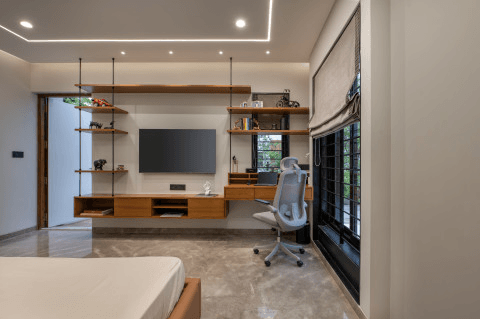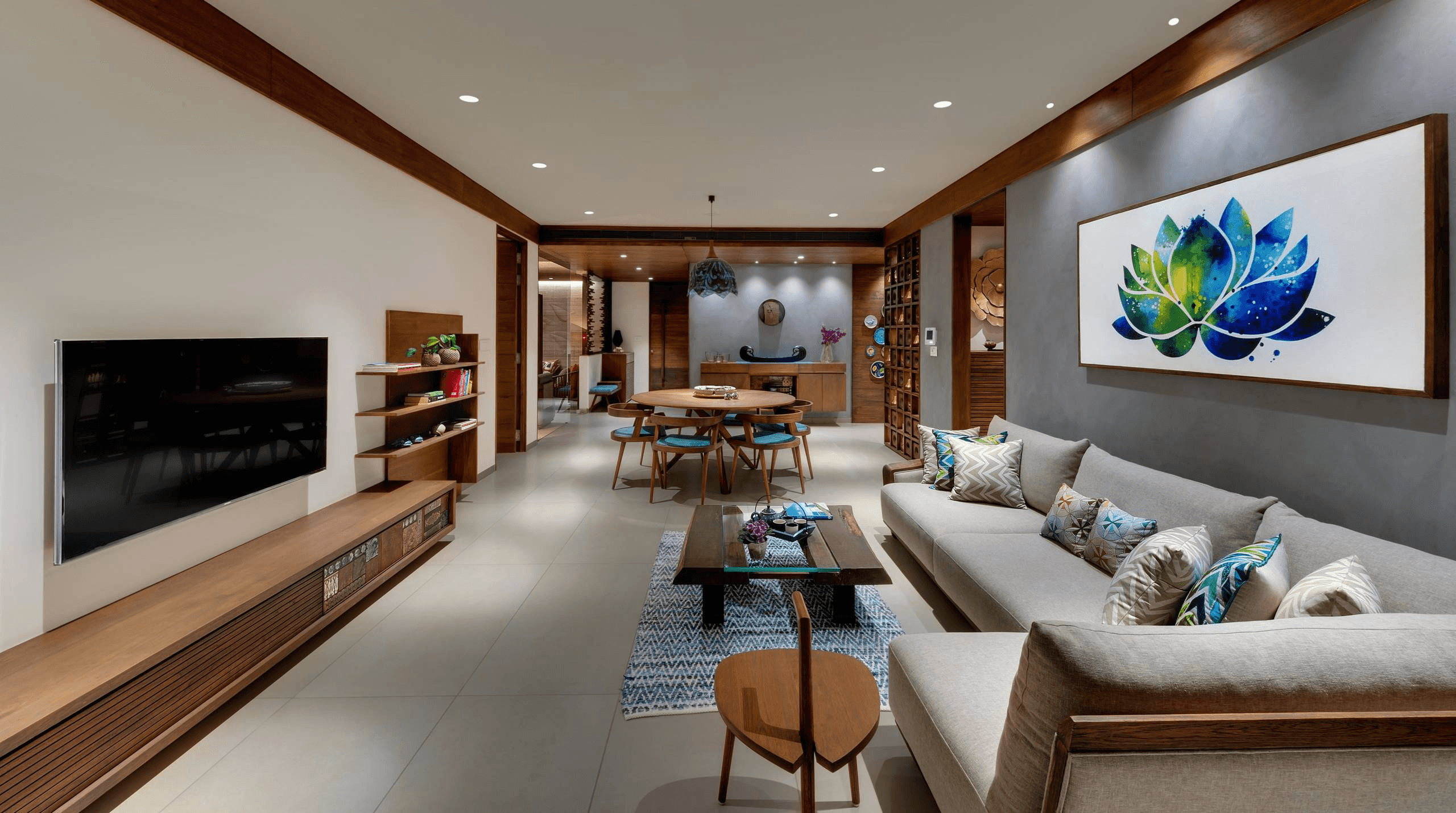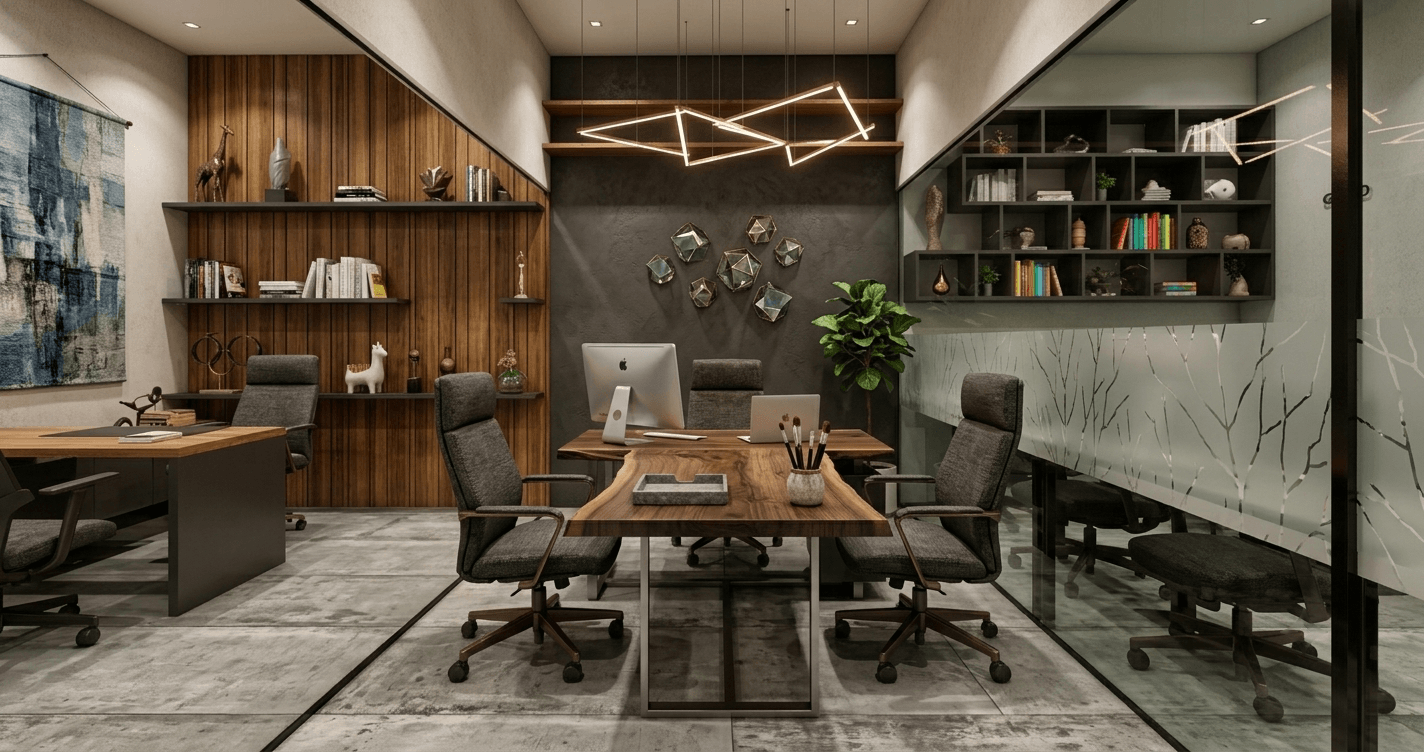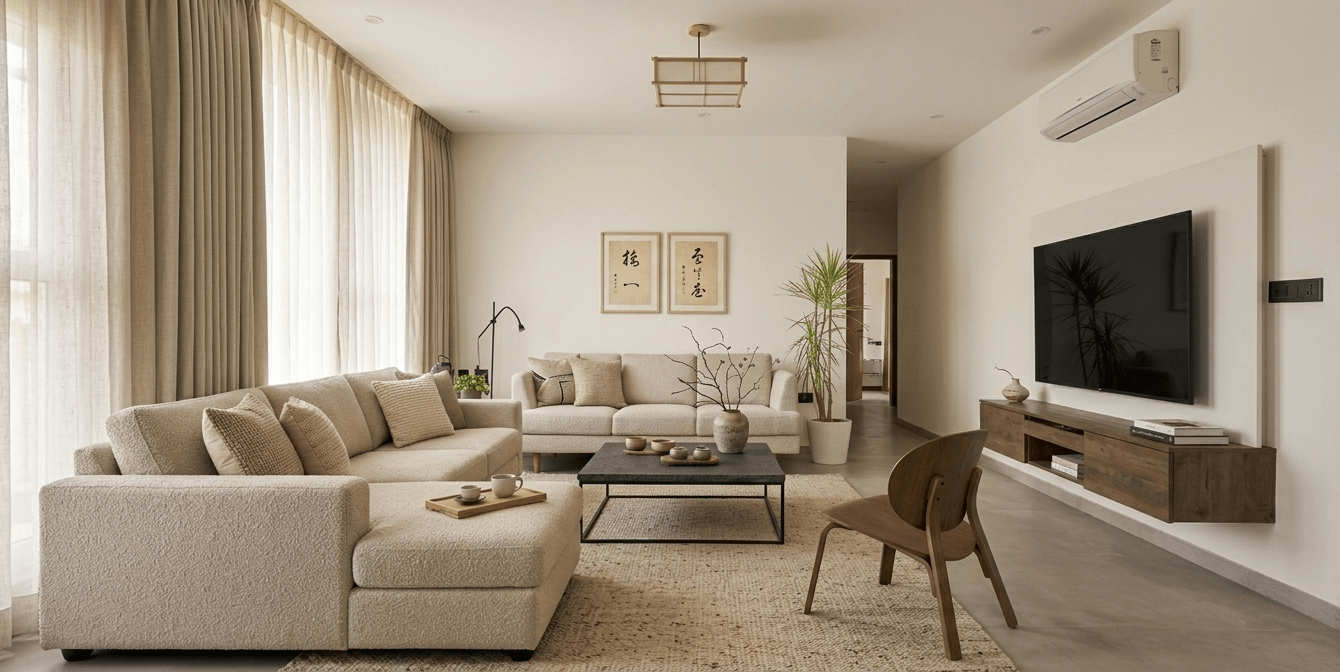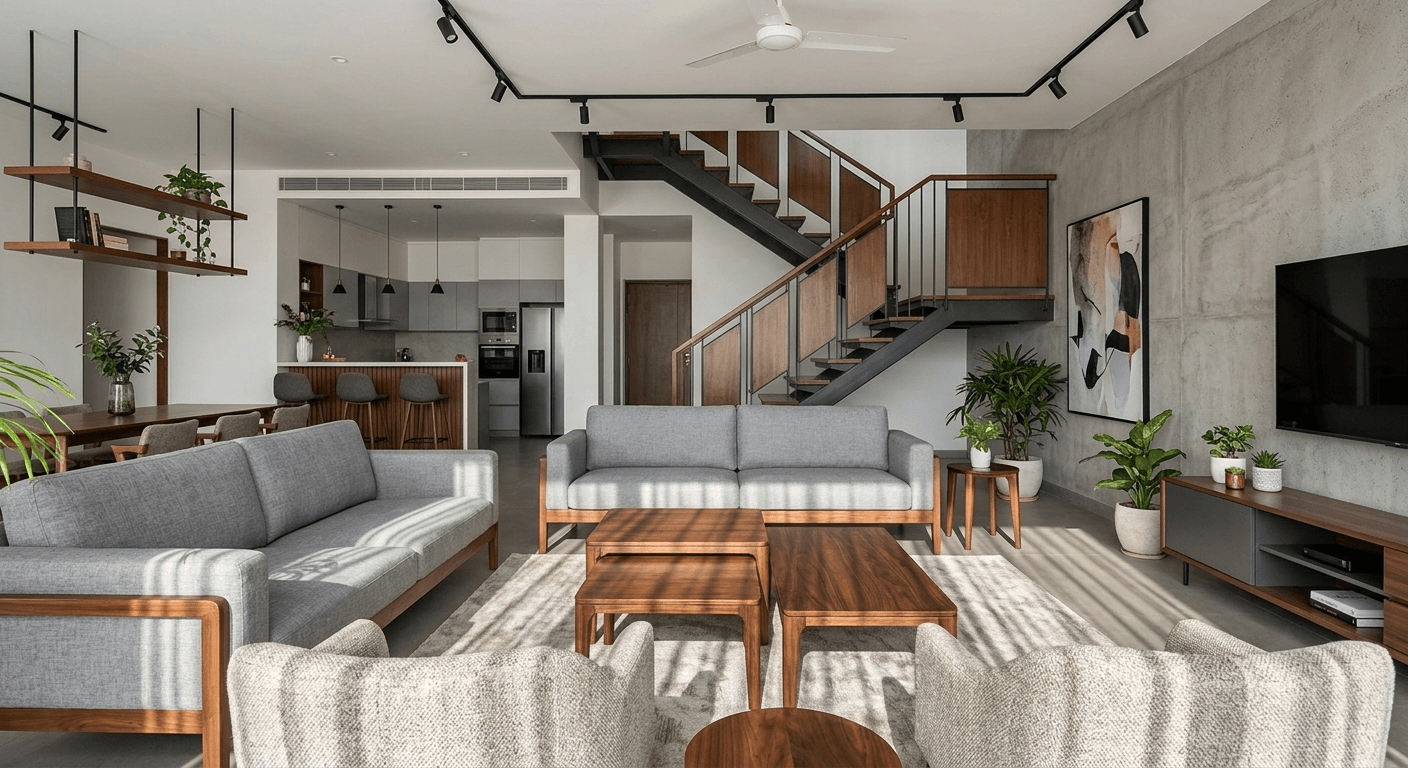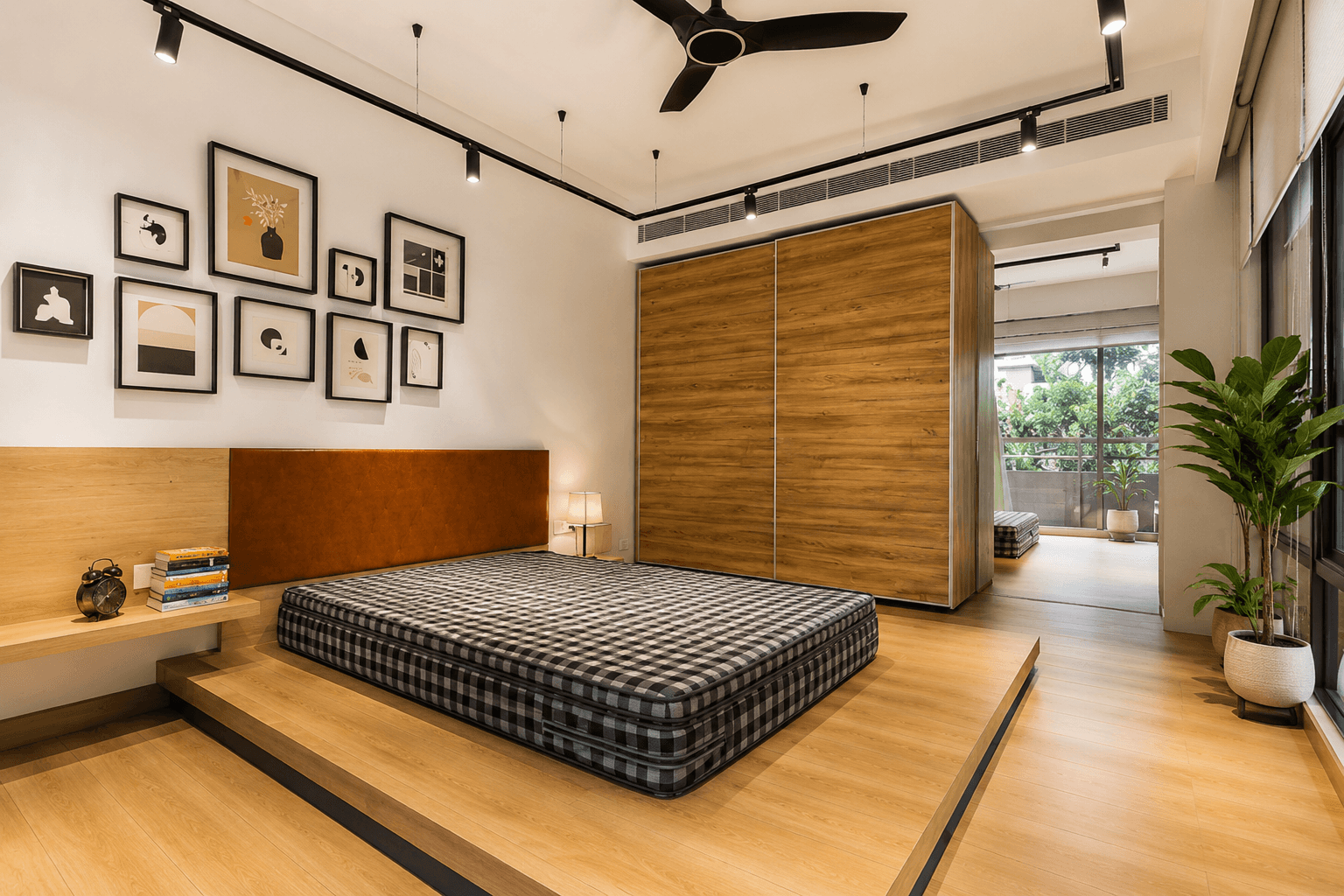
POP ceiling designs have become much more than decorative elements above a room. In 2026, homeowners are choosing modern POP ceiling designs that combine clean architecture, concealed lighting, subtle textures, smart functionality and elegant proportions.
The biggest change is the move away from excessively complicated, multi-layered ceilings. Instead, the latest POP false ceiling designs for 2026 focus on simple geometry, single-level trays, cove lighting, floating panels, curved details, wooden accents and carefully planned lighting.
Whether you are designing a living room, bedroom, dining area, foyer, home office or luxury apartment, the right POP ceiling can completely change the character of the space.
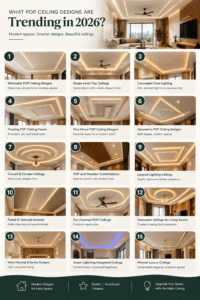
Quick Answer: What POP Ceiling Designs Are Trending in 2026?
The most popular POP ceiling trends for 2026 include:
- Minimalist POP ceiling designs
- Single-level tray ceilings
- POP ceilings with concealed cove lighting
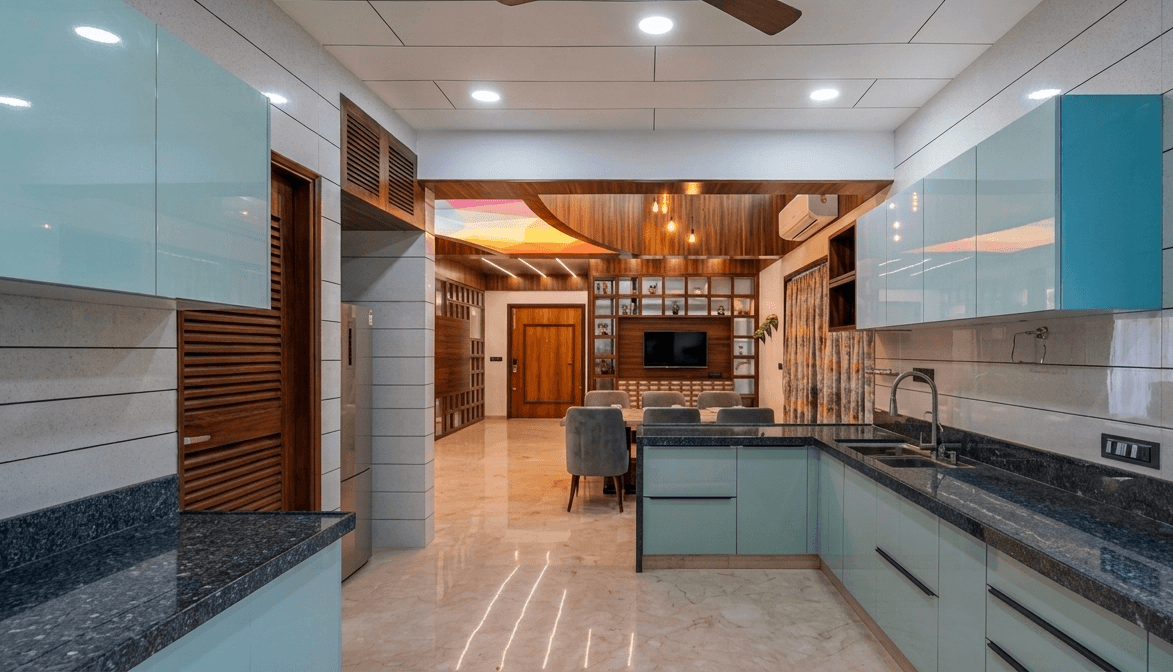
- Floating POP ceiling panels
- Plus-minus POP ceiling designs
- Geometric POP ceiling designs
- Curved and circular POP ceilings
- POP and wooden ceiling combinations
- POP ceilings with layered lighting
- Fluted and textured ceiling accents
- Fan-centred POP ceiling designs
- Statement POP ceilings for living rooms
- Warm neutral and earthy ceiling designs
- Smart-lighting-integrated false ceilings
- Minimal luxury POP ceilings
Modern 2026 designs generally favour restraint rather than excessive decorative mouldings.
1. Minimalist POP Ceiling Design
The simple POP ceiling design is one of the strongest trends for 2026.
Instead of filling the entire ceiling with decorative patterns, designers are using clean borders, subtle recesses and carefully positioned lights.
A minimalist POP ceiling can include:
- A slim perimeter border
- One recessed section
- Recessed spotlights
- Concealed LED strips
- A central fan or pendant
- A smooth white or neutral finish
This style works particularly well in modern apartments because it gives the room a finished appearance without making the ceiling visually heavy.
Best for: Living rooms, bedrooms, apartments and compact spaces.
2. Single-Level Tray POP Ceiling
The traditional multi-layer false ceiling is increasingly being replaced by single-level tray ceiling designs.
A tray ceiling creates a recessed or raised central area while keeping the overall design relatively shallow.
For a contemporary Indian home, a rectangular tray with a concealed LED strip can create a premium appearance without requiring an elaborate ceiling structure.
Why it is trending in 2026
- Cleaner appearance
- Less visual clutter
- Works with modern furniture
- Easier lighting integration
- Suitable for relatively low ceilings
- Creates architectural depth
The current design direction strongly favours shallow, clean ceiling profiles rather than excessively deep multi-tier structures.
3. POP Ceiling With Cove Lighting
POP ceiling design with cove lighting remains one of the most searched and requested combinations for modern homes.
Cove lighting hides an LED strip inside a recessed ceiling detail so that the light reflects indirectly from the ceiling or wall.
Instead of seeing the light source directly, you see a soft glow.
This creates a sophisticated atmosphere, particularly during the evening.
Popular combinations
POP + warm white LED
Creates a cosy residential atmosphere.
POP + recessed spotlights
Provides both ambient and task lighting.
POP + cove + pendant light
Works particularly well in living and dining rooms.
POP + dimmable LED
Allows the same room to shift between bright daytime lighting and relaxed evening lighting.
Lighting is increasingly being treated as an integral part of ceiling architecture rather than an afterthought.
4. Floating POP Ceiling Design
A floating POP ceiling design creates the appearance that a central ceiling panel is suspended below the main ceiling.
A narrow shadow gap or concealed LED strip around the panel creates the floating effect.
This design can look especially impressive in:
- Living rooms
- Master bedrooms
- Dining rooms
- Luxury apartments
- Large foyers
A rectangular floating panel is ideal for contemporary interiors, while circular or curved floating panels can create a softer appearance.
5. Plus-Minus POP Ceiling Design
The plus-minus POP design is another major 2026 trend in Indian interiors.
It uses raised and recessed POP elements to create depth and contrast.
Popular variations include:
- Square plus-minus POP
- Rectangular plus-minus design
- Geometric plus-minus ceiling
- Diamond-shaped POP
- Wooden plus-minus ceiling
- POP with gold accents
- POP with cove lighting
Current 2026 design collections feature plus-minus arrangements with geometric shapes, wood accents, chandeliers and concealed lighting.
Where does plus-minus POP work best?
It can be used in:
- Living rooms
- Bedrooms
- Dining areas
- Pooja rooms
- Luxury hall interiors
- Hotel and commercial interiors
However, the design should be scaled according to the ceiling height and room size. A complicated plus-minus design can make a smaller room feel visually crowded.
6. Geometric POP Ceiling Design
Geometric ceiling designs continue to be popular, but 2026 versions are more refined.
Instead of combining numerous shapes, designers are using one strong geometric concept.
Popular options include:
- Rectangular frames
- Squares
- Circles
- Hexagonal details
- Linear patterns
- Interlocking panels
- Asymmetrical forms
For example, a rectangular POP frame with a concealed LED strip can create a sophisticated modern ceiling without overwhelming the furniture below.
7. Curved POP Ceiling Designs
Curves are becoming increasingly important in contemporary interiors.
A curved POP ceiling can soften a room dominated by straight walls, rectangular furniture and linear cabinetry.
Popular ideas include:
- Curved ceiling borders
- Circular centre panels
- Arched POP details
- Wave-shaped ceiling elements
- S-shaped ceiling designs
- Rounded floating panels
The broader 2026 interior design movement is also incorporating more curved architectural elements because they create a softer and more organic visual character.
Best for
Curved POP ceilings work especially well in:
- Luxury living rooms
- Master bedrooms
- Large foyers
- Dining areas
- Contemporary villas
8. POP and Wooden Ceiling Design
Combining POP with wood is an excellent option if you want warmth without covering the entire ceiling in timber.
A common 2026 approach is to use:
POP base + wooden slats + concealed lighting
The white or neutral POP keeps the ceiling visually light, while wood introduces warmth and texture.
Wooden accents are appearing across current false-ceiling design collections, particularly alongside clean gypsum or POP forms.
Ideal for:
- Luxury living rooms
- Dining rooms
- TV units
- Master bedrooms
- Villas
- Contemporary bungalows
9. POP Ceiling With Layered Lighting
One of the biggest changes in modern ceiling design is the increased emphasis on layered lighting.
Instead of relying on a single chandelier or several identical spotlights, designers combine different light sources.
A ceiling might include:
- Cove lighting
- Recessed spotlights
- Pendant lights
- Decorative chandelier
- Wall lighting
- Accent lighting
Each layer serves a different purpose.
Example
Daytime: Natural light + minimal artificial lighting
Evening: Cove lighting + pendant
Dinner: Pendant + low-intensity cove
Movie night: Dimmed ambient lighting
This makes the ceiling more functional rather than simply decorative. Current 2026 lighting guidance also emphasises planning multiple lighting layers from the beginning of the interior design process.
10. POP Ceiling With Fluted or Textured Accents
Fluted textures have become popular throughout contemporary interiors, and the same language can be introduced into ceiling design.
Instead of using texture everywhere, a designer can create a POP ceiling with a small fluted wood or MDF accent.
For example:
POP border → recessed LED → central fluted panel
This creates a combination of:
- Smooth texture
- Vertical lines
- Warm material
- Ambient lighting
- Architectural depth
It works particularly well when the same fluted finish is repeated on a TV wall, partition or furniture.
11. Circular POP Ceiling Around the Fan
The classic circular POP ceiling design with a fan in the centre remains relevant in 2026.
The difference is that modern versions are much simpler.
Instead of elaborate floral patterns, designers are using:
- A clean circular recess
- A slim ring
- Hidden LED lighting
- Minimal moulding
- A modern ceiling fan
This creates a defined focal point without making the ceiling look outdated.
Best for:
- Bedrooms
- Small living rooms
- Children’s bedrooms
- Guest rooms
- Compact apartments
12. POP Ceiling Design for Living Room
The living room is one of the best spaces for a statement POP ceiling.
A modern POP ceiling design for hall or living room can combine:
- A rectangular tray
- Cove lighting
- Recessed spotlights
- A chandelier or pendant
- Wooden accents
- A ceiling fan
- Neutral paint
For a large living room, a floating central panel can create a stronger architectural focal point.
For a smaller living room, a simple perimeter POP border with concealed lighting is usually visually cleaner.
13. Modern POP Ceiling Design for Bedroom
Bedrooms benefit from softer and more relaxing ceiling designs.
Some of the best POP ceiling designs for bedrooms in 2026 include:
Simple perimeter cove
A subtle recessed border creates soft ambient lighting.
Circular fan-centred design
Useful for keeping the fan visually integrated.
Floating central panel
Creates a contemporary luxury look.
Soft geometric POP
Rectangular or curved forms add detail without making the bedroom busy.
POP + warm LED
Warm lighting can create a more comfortable evening atmosphere.
Current 2026 bedroom ceiling design references continue to feature tray ceilings, cove lighting, circular layouts and geometric POP designs.
14. Modern POP Ceiling Design for Dining Room
The dining area is an excellent location for a ceiling that highlights the dining table.
One effective approach is:
Rectangular POP frame + pendant light + concealed cove lighting
The pendant becomes the visual centre, while the POP ceiling defines the dining zone.
For open-plan homes, this can also visually separate the dining area from the living room without constructing a physical partition.
15. POP Ceiling for Small Rooms
If your room is small, avoid automatically choosing a large multi-layered ceiling.
Instead, consider:
- Slim POP borders
- Shallow trays
- Single-level designs
- Light colours
- Concealed lighting
- Minimal geometric details
- Smaller recessed fixtures
The objective should be to make the room appear more spacious rather than filling every inch of the ceiling.
For smaller rooms, current design guidance similarly recommends shallow, uncomplicated profiles over deep layered ceilings.
16. Luxury POP Ceiling Design for Large Rooms
Large rooms provide more freedom.
A luxury POP ceiling can include:
- Double-layer detailing
- Floating central panel
- Large chandelier
- Cove lighting
- Recessed spotlights
- Wood accents
- Geometric framing
- Decorative ceiling centre
However, luxury does not necessarily mean adding more layers.
In 2026, proportion, lighting and material quality are increasingly important to achieving a premium appearance.
17. POP Ceiling With Smart Lighting
Smart lighting is another emerging direction for modern false ceilings.
A smart POP ceiling can incorporate:
- Dimmable LEDs
- Voice-controlled lighting
- Tunable white lighting
- Scene-based lighting
- App-controlled lights
- Separate lighting circuits
For example, you can create different scenes such as:
Bright: Work and cleaning
Warm: Evening relaxation
Dining: Pendant + ambient lighting
Movie: Low-intensity cove lighting
Smart lighting integration is specifically identified among 2026 false-ceiling trends.
18. Minimal Luxury POP Ceiling
One of the most important 2026 trends is minimal luxury.
The idea is simple:
Use fewer ceiling elements, but make every element intentional.
Instead of:
Multiple layers + multiple colours + decorative mouldings + excessive spotlights
the modern approach is:
One strong form + concealed lighting + quality finish + correct proportions.
This creates a ceiling that looks contemporary today and is less likely to feel dated in a few years.
POP Ceiling Colour Trends for 2026
White remains the safest and most versatile POP ceiling colour, but modern interiors are increasingly introducing subtle tones.
Popular combinations include:
White + warm wood
Ideal for contemporary homes.
White + beige
Creates a soft, understated appearance.
White + greige
Works well with minimalist interiors.
White + charcoal
Suitable for dramatic modern spaces.
Cream + warm lighting
Creates a softer luxury aesthetic.
Earthy neutral + wood
Works particularly well with natural-material interiors.
Current 2026 interior trends are favouring warmer, earthy tones and more personalised spaces rather than relying exclusively on stark, cool palettes.
POP Ceiling Design and Lighting: What Should You Choose?
The ceiling design and lighting should be planned together.
| POP Ceiling Style | Recommended Lighting | Best For |
|---|---|---|
| Simple POP border | Cove + spotlights | Apartments |
| Tray ceiling | Cove + pendant | Living room |
| Floating panel | LED + downlights | Luxury interiors |
| Circular POP | Central light/fan | Bedroom |
| Plus-minus POP | Cove + spotlights | Modern homes |
| Geometric POP | Recessed lights | Contemporary interiors |
| POP + wood | Warm LED | Luxury homes |
| Curved POP | Cove lighting | Premium interiors |
| Minimal POP | Recessed spots | Small rooms |
| Statement POP | Chandelier + cove | Large living rooms |
How to Choose the Right POP Ceiling Design?
Before selecting a design from Pinterest or Instagram, consider these factors.
1. Measure the ceiling height
A complicated false ceiling can reduce the perceived height of a room.
For low-height apartments, shallow designs are generally preferable.
2. Consider the room size
A large geometric design may look excellent in a spacious hall but overwhelming in a compact bedroom.
3. Plan the fan position
If you are installing a ceiling fan, its position should be coordinated with the POP design.
4. Plan lighting before construction
Do not finalise the POP design and decide the lights afterward.
The electrical and lighting layout should be integrated into the ceiling design.
5. Match the interior style
A minimalist home needs a different ceiling from a traditional luxury villa.
6. Avoid excessive layers
More layers do not automatically mean a more luxurious ceiling.
7. Think about maintenance
Choose designs that allow reasonable access to electrical components, drivers and LED systems.
POP vs Gypsum Ceiling: Which Is Better for 2026?
Both POP and gypsum can create modern false ceilings, but they are suited to different applications.
POP is particularly useful when you want custom moulded forms, curves, decorative details and seamless on-site shaping.
Gypsum board is well suited to clean, smooth, contemporary false ceilings and can provide faster installation in many applications.
Modern interiors can also combine materials rather than treating POP and gypsum as competing choices. Current Indian ceiling guides feature both materials alongside wood and other finishes.
The right choice depends on:
- Ceiling design
- Room dimensions
- Existing slab
- Ceiling height
- Lighting requirements
- Moisture exposure
- Installation method
- Budget
- Desired finish
How Much Does a POP False Ceiling Cost in India in 2026?
POP ceiling prices vary significantly depending on design complexity, labour, finishing, lighting and location.
As a broad 2026 reference, published Indian interior sources show simple POP/false-ceiling work starting at roughly ₹65–₹150+ per sq. ft., while more elaborate designs with layered construction, premium finishes, wood accents and additional lighting can cost considerably more.
A practical budget should account separately for:
- POP work
- Framework/support where required
- Surface finishing
- Primer and paint
- LED strips
- LED profiles
- Spotlights
- Electrical wiring
- Drivers
- Decorative lights
- Fan/chandelier installation
Important: POP ceiling pricing is not fixed. The final cost depends on the actual design, ceiling area, height, material specification, lighting and site conditions.
What POP Ceiling Designs Are Going Out of Style in 2026?
The strongest 2026 design direction is away from unnecessarily complicated ceilings.
Designers are increasingly moving away from:
- Excessive multi-tier ceilings
- Too many decorative mouldings
- Random geometric patterns
- Excessive spotlights
- Brightly coloured cove lighting everywhere
- Overly ornate floral POP work
- Too many materials competing on one ceiling
Instead, the emphasis is on clean geometry, restrained detailing, concealed lighting and better proportions.
2026 POP Ceiling Design Ideas at a Glance
If you want a quick shortlist, consider these 15 trendy POP ceiling designs for 2026:
- Minimalist POP ceiling
- Single tray POP ceiling
- Cove lighting POP ceiling
- Floating POP panel
- Plus-minus POP design
- Geometric POP ceiling
- Circular POP ceiling
- Curved POP ceiling
- POP with wooden slats
- POP with fluted accents
- Fan-centred POP ceiling
- POP ceiling with chandelier
- Layered-lighting ceiling
- Smart-lighting POP ceiling
- Minimal luxury POP ceiling
Frequently Asked Questions About POP Ceiling Designs in 2026
What is the latest POP ceiling design for 2026?
The latest POP ceiling designs for 2026 focus on minimalist forms, shallow trays, concealed cove lighting, floating panels, curved details, geometric patterns, wood accents and layered lighting rather than heavily decorated multi-tier ceilings.
Which POP ceiling design is best for a living room?
A simple tray ceiling, perimeter cove ceiling, floating POP panel or geometric POP ceiling can work well in a living room. The best design depends on the room size, ceiling height, furniture layout and lighting requirements.
Is POP ceiling still trending in 2026?
Yes. POP remains widely used in Indian interiors, particularly for customised ceiling shapes, mouldings, curves, plus-minus designs and integrated lighting. However, the design language in 2026 is generally cleaner and more minimalist.
Which POP ceiling design is best for a bedroom?
Simple cove lighting, a circular fan-centred design, a shallow tray or a floating central panel can work well in bedrooms.
Is cove lighting still popular in 2026?
Yes. Cove lighting continues to be a major ceiling-lighting trend because it provides indirect ambient illumination and works particularly well with modern POP and false-ceiling designs.
What colour is best for a POP ceiling?
White remains the most versatile choice. Warm whites, beige, greige and subtle earthy tones can also work well depending on the walls, flooring, furniture and lighting.
Is a POP ceiling suitable for a small room?
Yes, but the design should generally be shallow and simple. A slim perimeter border or single recessed section can add architectural detail without making the room feel smaller.
How much does a POP ceiling cost in 2026?
The cost depends on the design and location. Simple POP ceiling work can start around ₹65–₹150+ per sq. ft., while premium layered designs and ceilings with extensive lighting or wood detailing can cost substantially more.
POP or gypsum—which should I choose?
POP offers flexibility for custom shapes and moulded details, while gypsum is well suited to clean, contemporary false-ceiling construction. The choice should be based on the design, site conditions, ceiling height, finish and budget.
Final Thoughts: POP Ceiling Design Trends for 2026
The biggest POP ceiling trend for 2026 is simplicity with purpose.
A modern ceiling does not need multiple layers or elaborate decoration to look expensive. A carefully proportioned POP tray, a concealed cove, warm layered lighting, a subtle wood accent or a beautifully detailed floating panel can create a much stronger result.
For an Ahmedabad home, the ceiling should also be designed around the actual room height, fan position, AC requirements, electrical layout, furniture plan and natural light rather than simply copying an online reference image.
The best modern POP ceiling design is ultimately the one that works with the architecture and lifestyle of the room—not merely the one that looks impressive in a photograph.