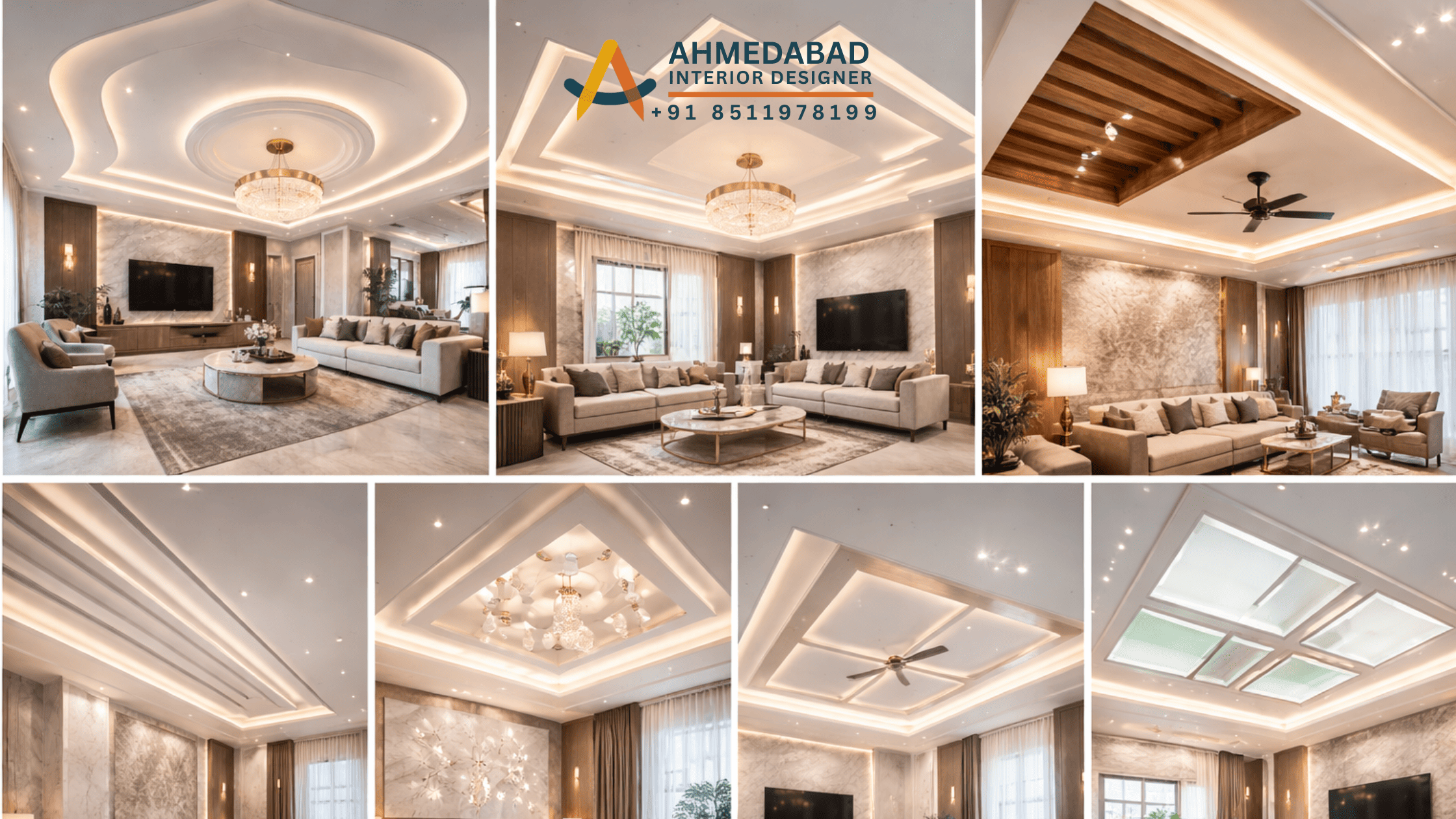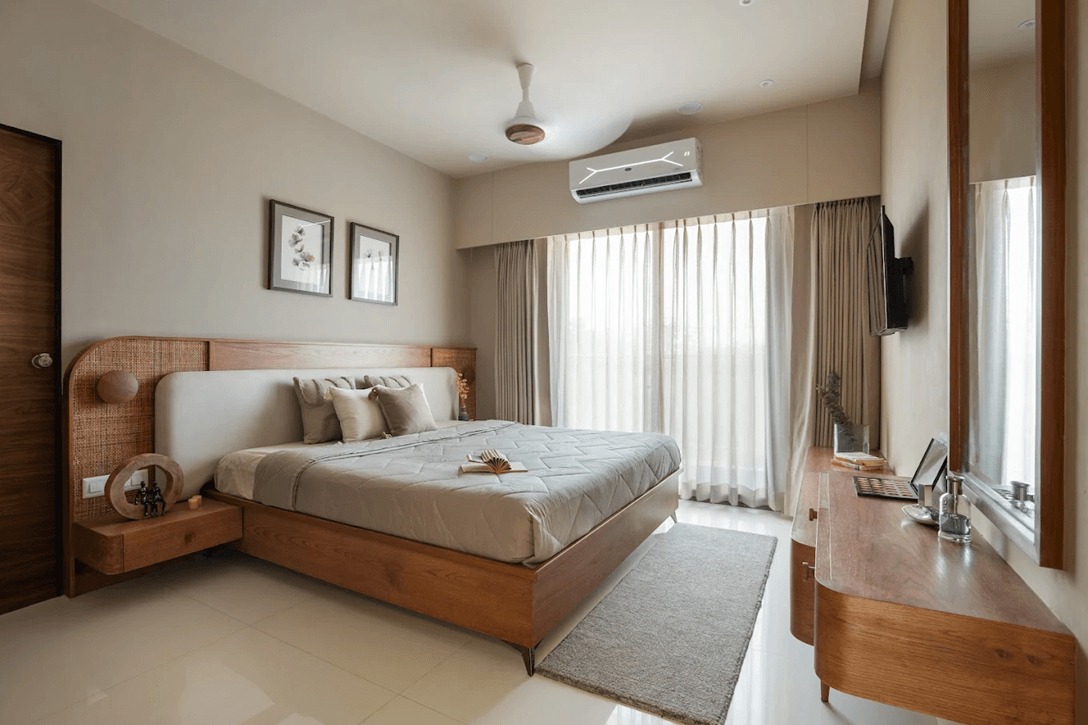
Vastu Interior Design Tips for Living Room: The Complete 2026 Guide
The best direction for a living room as per Vastu is North, East, or North-East. Heavy furniture like sofas should be placed in the South or South-West corner. The TV should face South-East. Use light colours such as off-white, beige, light blue, or pale green. Keep the central space (Brahmasthan) completely open and clutter-free for positive energy flow.
What Is Vastu Interior Design and Why Does It Matter in 2026?
Your living room is not just a room. It is the energy centre of your entire home, the space where your family bonds, guests are welcomed, and the mood of the whole house is set.
Vastu Shastra is India’s 5,000-year-old science of architecture and spatial design. It is built on one core principle: when your space aligns with the five natural elements, Earth (Bhumi), Water (Jal), Fire (Agni), Air (Vayu), and Space (Aakash), your home becomes a source of peace, prosperity, and well-being.
In 2026, more Ahmedabad homeowners than ever are combining modern interior design with Vastu principles. And the results speak for themselves: spaces that feel lighter, families that feel calmer, and homes that feel genuinely alive.
This is not a list of superstitions. This is a practical, room-by-room guide to making your living room work for you, energetically, aesthetically, and functionally.
1. Living Room Direction as Per Vastu: Get This Right First
The single most important Vastu decision for your living room is its position within the house. If this is wrong, no amount of colour or furniture arrangement will fix it.
Best directions for the living room:
- North-East (Ishan Kon): The most auspicious direction. At India’s latitude, this receives gentle morning sunlight that diffuses evenly throughout the day, maintaining a calm atmosphere and lower indoor temperature. This is the gold standard.
- North: Excellent. Promotes wealth, career growth, and mental clarity.
- East: Very good. East-facing rooms fill with energising morning sunlight.
- North-West: Acceptable, particularly in apartments where full directional choice is not possible.
Direction to strictly avoid:
- South-West: Never build or place a living room here. This zone is reserved for the master bedroom and is associated with heaviness and inertia, not social energy.
For facing house type:
- East-facing house: Living room in East or North-East
- North-facing house: Living room in North, North-East, or North-West
- South-facing house: Living room in South-East or South zone
- West-facing house: Living room in West or North-West
If your apartment already has a fixed layout, do not panic. The tips below will help you correct and balance any directional limitations.
2. Main Entrance Placement for the Living Room
The main door is the gateway of energy into your home. In Vastu, it is called the mouth of the house, and what enters through it shapes everything inside.
- The main door should ideally open in the North, East, or North-East direction
- It must open inward and clockwise, this invites energy in rather than pushing it out
- The door should be made of solid, high-quality wood and should be the tallest door in the home
- Keep it well-lit at all times, a dark entrance is a blocked entrance
- Avoid placing mirrors directly opposite the main door, as they reflect energy back out
- A clean nameplate and a fresh rangoli or welcome mat at the entrance signal positivity and clarity to incoming energy
If your main door faces South or South-West, place a Vastu pyramid, copper strip on the threshold, or use specific colour corrections on the door to neutralise the direction. Consult a professional interior designer in Ahmedabad for accurate corrections.
3. Sofa Placement and Furniture Arrangement as Per Vastu
Furniture placement is where most homeowners get Vastu completely wrong, and where the most dramatic improvements can be made with zero renovation.
Sofa and heavy seating:
- Place the main sofa and all heavy furniture, sectionals, recliners, bookcases, credenzas, against the South or South-West wall
- This anchors stability and permanence in the room
- The head of the family should ideally sit facing North or East while seated in the living room
- Guests should face North or East as well — arrange secondary seating accordingly
- Additional chairs and accent furniture can go along the West or North-West walls
Critical rules:
- Never place the main sofa or any heavy piece in the centre of the room, this blocks Brahmasthan (the central energy zone) and disrupts natural energy flow
- Never place furniture directly below a ceiling beam, in Vastu, a beam pressing down on a seated person causes stress and health issues. If unavoidable, use a false ceiling to cover the beam
- Choose square or rectangular furniture shapes, these represent order, clarity, and stability. Circular furniture, while trendy in 2026, should only be used in the North-East or central zones and in moderation
- Avoid sharp angular furniture pointing toward the main door, this emits what Vastu calls teevra urja, or sharp disruptive energy
Materials matter:
- Solid wood furniture vibrates at a higher energy frequency than synthetic materials. Teak, sheesham, and mango wood are ideal
- Avoid excessive use of glass, chrome, or synthetic materials for primary furniture, they are energetically cold and disruptive when overdone
4. Best Colours for Living Room as Per Vastu
Colour is not decoration, it is energy. Every colour carries a vibrational frequency that either supports or disrupts the Vastu energy of a space.
Best Vastu colours for living room walls:
| Colour | Vastu Effect | Best Wall Direction |
|---|---|---|
| Off-white / Cream | Peace, clarity, openness | All walls |
| Light beige | Grounding, warmth, stability | South, West |
| Pale yellow | Optimism, mental energy | East-facing wall |
| Light blue | Calm, communication, clarity | North-facing wall |
| Pale green | Growth, health, freshness | North-East, East |
| Warm ivory | Welcoming, neutral energy | All walls |
Colours to avoid:
- Black: absorbs energy, makes the room feel heavy and oppressive
- Dark red: overstimulates and increases agitation and conflict
- Dark brown (on large surfaces): creates stagnation
- Grey (as a dominant colour): neutralises energy and enthusiasm
A popular 2026 interior design trend in Ahmedabad is combining warm off-white walls with wooden accents and a single feature wall in sage green or dusty blue, this perfectly aligns with Vastu while looking contemporary and elegant.
5. Natural Light and Ventilation: The Most Underrated Vastu Tool
No Vastu tip is more powerful than maximising natural light. Light is prana, life force. A dim room is a blocked room, regardless of what else you do.
Vastu rules for light:
- Windows should ideally be placed on the North and East walls to capture gentle morning and afternoon sunlight
- North-East windows are the most auspicious, they bring in the softest, most diffused light that regulates your circadian rhythm and lowers indoor temperature naturally
- Keep all windows clean and unobstructed at all times
- Use light, sheer curtains on North and East windows to allow maximum light while maintaining privacy
- Heavier curtains can be used on South and West windows to control intense afternoon sun
Artificial lighting at night:
- Use warm white or amber lighting (2700K–3000K colour temperature) in the evenings, this mimics sunset and signals calm and relaxation to the nervous system
- Avoid harsh white or blue-toned LED lights in the living room, they disrupt the evening energy and prevent relaxation
- Ensure all corners of the room are lit, dark corners accumulate stagnant energy in Vastu
- Use indirect cove lighting or wall sconces to create warm, even illumination
6. TV and Electronics Placement as Per Vastu
Electronic devices represent the Fire element (Agni) in Vastu. Their placement must be deliberate.
- Best position for TV: South-East corner of the living room, this is the Agni zone and perfectly aligns with the fire element
- The TV screen, when off, acts like a mirror, if it reflects the main door, it can push energy back out. Angle it slightly if needed
- Avoid North-East placement for any electronics, this zone should remain calm, open, and spiritually clear
- Avoid South-West for electronics, this is a stability zone, not a fire zone
- All other electronics, speakers, routers, OTT devices, should also cluster in the South-East corner
- Avoid a cluttered entertainment unit, tangle of wires and dead electronics create stagnant, disruptive energy. Keep it clean, minimal, and functional
7. Indoor Plants for Positive Energy
Plants are one of the most powerful and most overlooked tools in Vastu interior design. They bring life, rhythm, air purification, and natural energy into the room.
Best Vastu plants for living room:
- Money Plant (Pothos): Place in the North or North-East. Believed to attract wealth and financial stability. A trailing money plant near a North window is one of the most classic Vastu corrections
- Peace Lily: Place in the North-East. Purifies air, reduces indoor pollutants, and brings tranquillity
- Bamboo Plant (Lucky Bamboo): South-East or East. Represents growth, flexibility, and resilience
- Areca Palm: East or South-East. Excellent natural humidifier; brings lush, grounding energy
- Snake Plant (Mother-in-Law’s Tongue): South or South-East. One of the most effective air purifiers; highly suited to modern Ahmedabad apartments
Plants to avoid:
- Cactus and thorny plants: emit sharp, defensive energy; not suitable for social spaces
- Artificial or dried flowers: Vastu specifically recommends against these as they carry dead energy. Always use fresh or live plants
- Avoid wilting or unhealthy plants: a dying plant in Vastu represents declining energy. Remove immediately and replace
8. Mirrors and Reflective Décor as Per Vastu
Mirrors amplify whatever energy is in the room, which means placing them correctly is critical.
Where to place mirrors:
- North wall: Best position. Reflects light, amplifies prosperity energy, and makes the room feel larger
- East wall: Good. Brings in morning light energy
- Never place mirrors on South or South-West walls, this destabilises the grounding energy of these zones
Mirror rules:
- Mirrors should reflect pleasant views, plants, or open space, never a cluttered area, a toilet door, or the main entrance
- Avoid placing mirrors directly opposite each other, this creates an energy loop that can feel disorienting and restless
- Keep mirrors clean and crack-free at all times, a cracked mirror is one of the strongest negative Vastu signs and should be replaced immediately, not taped or kept “until later”
9. What to Keep Out of Your Living Room? (Vastu Don’ts)
This section alone is worth the read. Most homeowners never hear about what NOT to do.
Remove or avoid the following immediately:
- Broken or chipped items, clocks, vases, decorative pieces, mirrors. Broken objects symbolise broken energy. Fix or remove them
- Photos of deceased family members displayed in the living room, these belong in a private memory space, not the main social area
- War scenes, violent artwork, sorrowful images, or abstract art depicting conflict, your living room walls directly influence the mood and relationships of those who spend time there. Choose art that depicts nature, abundance, birds, or peaceful landscapes
- Dried or artificial flowers, replace with fresh flowers or live plants
- Unused, dead electronics, an old TV that doesn’t work, a broken speaker, a non-functional clock — all accumulate stagnant energy
- Thorny plants such as cactus, remove from social spaces
- Overhead beams directly above seating, if unavoidable, install a false ceiling
- Clutter under sofas and furniture, one of the most common yet ignored Vastu issues. Clear it out completely
10. The Brahmasthan: Why the Centre of Your Living Room Must Stay Open?
This is possibly the most important yet least-known Vastu principle for the living room.
The Brahmasthan is the central zone of any space, the geometric heart of the room. In Vastu, this area acts as the energy diaphragm of the home. It must remain completely open and unobstructed to allow prana (life force energy) to circulate freely through the entire space.
What this means practically:
- Do not place a coffee table, ottoman, or large decorative object permanently in the very centre of the room
- Do not place a pillar, beam support, or built-in unit in the centre if designing from scratch
- Keep the floor in the central zone clear of clutter and rugs that extend edge-to-edge
A light, movable coffee table is acceptable, but the centre should never feel blocked or crowded.
When the Brahmasthan is clear, energy circulates naturally. Families report that conversations feel easier, the room feels larger than it is, and guests genuinely do not want to leave.
11. Floor and Ceiling Vastu Tips
Floor slope:
- If you have any control over floor level or slope, tilt slightly toward North or East, these directions support energy flow and, for homes with a study corner in the living room, improve concentration and focus
- Avoid slopes toward South or West
Flooring materials:
- Natural stone (marble, granite, sandstone) and hardwood flooring are most aligned with Vastu
- Avoid dark-coloured flooring as the primary choice, it makes the space feel heavy. If you love dark floors, balance with very light walls and good lighting
- White marble or light beige stone flooring for the living room is a classic Ahmedabad choice that works beautifully with Vastu
Ceiling height:
- Higher ceilings support better energy circulation
- Avoid a cluttered or heavily decorated ceiling, keep it clean and either white or very light in colour
- False ceilings are acceptable and popular in modern Ahmedabad homes, just ensure they do not press too low (minimum 9 feet is ideal) and are free of beams over seating areas
12. Family Photos and Wall Art as Per Vastu
- Place family portraits and happy photos on the South-West or West walls, these directions are associated with lineage, continuity, and emotional grounding
- Photos should be at eye level and evenly spaced, not randomly scattered
- Choose art that depicts nature, flowing water, blooming flowers, birds in flight, mountains, or sunrise, all of these are considered highly auspicious
- Waterfalls or flowing water images placed on the North wall attract wealth and opportunity
- Avoid single portraits of individuals displayed prominently, prefer group or family images in the living room
- Avoid art showing predatory animals, storms, or desolation
13. Vastu Dosh (Vastu Defects) in the Living Room and How to Fix Them
Even if your living room has directional issues you cannot change structurally, these corrections work.
| Vastu Dosh | Easy Correction |
|---|---|
| South-West living room | Use heavy furniture in the SW corner, earthy colours, no large windows on SW |
| South-facing main entrance | Install a Vastu pyramid above the door, use copper nameplate |
| Beam over sofa | Install false ceiling to cover the beam |
| Dark corners | Use salt lamps or warm-lit floor lamps in corners |
| Cracked mirrors | Replace immediately — no exceptions |
| TV in North-East | Shift to South-East corner or use a cabinet to contain the electronic |
| Cluttered Brahmasthan | Clear the centre, place only a light movable coffee table |
| No natural light | Use full-spectrum daylight bulbs (5000K) during the day, switch to warm amber (2700K) in evenings |
14. Vastu Interior Design for Living Room in Ahmedabad: Local Considerations
Ahmedabad has specific climatic and architectural realities that shape how Vastu principles are applied.
Climate considerations:
- Ahmedabad summers are intense. North and North-East facing living rooms are especially valuable here because they avoid harsh afternoon western sun while still receiving excellent natural light
- Use light cotton or linen curtains on East-facing windows — block the 2pm–5pm western sun with thicker drapes on West-facing openings
Apartment-specific Vastu in Ahmedabad:
- Most modern flats in Ahmedabad, whether in Gota, Bopal, South Bopal, Prahlad Nagar, or Satellite, are designed with the living room adjacent to the main entrance
- If your flat is South-facing, use the Vastu dosh corrections listed above
- In 2BHK and 3BHK apartments, the living room often doubles as a study space for children — in this case, the study corner should be placed in the West zone of the living room facing East or North for best concentration
Interior design trends in Ahmedabad for 2026:
- Warm wooden textures with off-white walls, Vastu aligned and contemporary
- Handcrafted Rajasthani or Gujarati décor as wall art, culturally grounded and energetically positive
- Indoor vertical gardens on North or East walls, trending and Vastu-perfect
- Minimal clutter, clean lines, and open floor plans, modern design and Vastu Brahmasthan principles are completely aligned here
Quick Vastu Checklist for Your Living Room
Before you call this done, run through this checklist:
- Living room is in North, East, North-East, or North-West direction
- Main door opens inward and clockwise toward North, East, or North-East
- Heavy sofa is placed against South or South-West wall
- Seating faces North or East
- TV is in the South-East corner
- No furniture in the centre of the room (Brahmasthan is clear)
- No overhead beams above the sofa or seating
- Walls are in light, calm colours (off-white, beige, pale green, light blue)
- Natural plants are placed in North or North-East zones
- Mirrors are on North or East walls only
- No broken, cracked, or non-functional items in the room
- No dried or artificial flowers
- No dark or violent artwork
- All corners are lit — no dark corners
- Fresh flowers or live plants are present
- All electronics are in the South-East corner
- Family photos are on South-West or West wall at eye level
Frequently Asked Questions (FAQs)
What is the best direction for a living room as per Vastu?
The best direction for a living room as per Vastu is North-East, followed by North and East. These directions receive natural sunlight, promote positive energy, and support social harmony. South-West should be strictly avoided for the living room.
Which direction should the sofa face in the living room as per Vastu?
The sofa should be placed against the South or South-West wall so that the person seated faces North or East. Never place heavy seating in the centre of the room or blocking the North-East corner.
Which colours are best for living room as per Vastu Shastra?
The best Vastu colours for a living room are off-white, cream, beige, pale yellow, light blue, and pale green. Avoid black, dark red, and dark brown as primary wall colours as they absorb energy and create heaviness.
Where should the TV be placed in the living room as per Vastu?
The TV should be placed in the South-East corner of the living room. This is the Agni (fire) zone, which aligns with electronic devices. Avoid placing the TV in North-East or South-West.
What plants are good for living room as per Vastu?
Money Plant, Peace Lily, Lucky Bamboo, Areca Palm, and Snake Plant are the best plants for a Vastu-compliant living room. Place them in the North or North-East corner. Avoid cactus, thorny plants, and dried or artificial flowers.
What is Brahmasthan and why should it be kept open?
Brahmasthan is the central zone of a room or home in Vastu Shastra. It acts as the energy centre of the space and must remain open and unobstructed to allow free circulation of positive energy (prana). Blocking the Brahmasthan with heavy furniture disrupts the energy flow of the entire room.
What should not be kept in the living room as per Vastu?
Do not keep broken mirrors, cracked glass, artificial or dried flowers, photos of deceased relatives, violent or sad artwork, non-functional electronics, thorny plants like cactus, or any clutter under furniture in the living room. These items block or attract negative energy.
Can I apply Vastu tips to my flat or apartment in Ahmedabad if I cannot change the structure?
Yes. Most Vastu corrections for living rooms are about furniture placement, colours, lighting, décor, and plants, none of which require structural changes. Even in a South-facing flat, proper furniture arrangement, colour selection, light corrections, and Vastu remedies can significantly improve the energy of your living room.
How does Vastu interior design help in Ahmedabad’s climate?
North and North-East facing living rooms in Ahmedabad avoid harsh western afternoon sun, stay naturally cooler, and receive consistent diffused light throughout the day, making them both Vastu-aligned and climatically ideal for Ahmedabad’s extreme summer heat.
Should I hire an interior designer for Vastu-compliant living room design in Ahmedabad?
Yes, particularly if your flat has directional limitations or Vastu doshas that need correction. A professional interior designer who understands both modern aesthetics and Vastu principles can create a space that is visually stunning, functionally smart, and energetically balanced. At Ahmedabad Interior Designer, we specialise in exactly this.
Looking for a Vastu-compliant living room design for your flat or bungalow in Ahmedabad? Contact Ahmedabad Interior Designer for a consultation — we create spaces that are beautiful, functional, and energetically balanced.
![Hotel Interior Designer in Ahmedabad [2026 Cost Guide]](https://ahmedabadinteriordesigner.in/wp-content/uploads/2026/03/Hotel-Interior-Designer-in-Ahmedabad.png)