Why Office Vastu Matters More Than You Think?
Your office isn’t just four walls and a desk — it’s where decisions, deals, and daily hustle shape your financial future. According to Vastu Shastra, the ancient Indian science of architecture and energy alignment, the layout, direction, and design of your workspace directly influence prosperity, focus, and employee well-being.
Whether you run a corporate office, a home-based startup, or manage a large commercial space, applying the right office Vastu tips can help remove energy blockages (Vastu doshas), improve decision-making, and create an environment that supports growth instead of resisting it.
In this guide, we cover everything that’s currently working for real offices — entrance direction, cabin placement, seating direction, desk Vastu, colours, plants, department-wise placement, common mistakes, and quick fixes for rented or ready-made offices where structural changes aren’t possible.
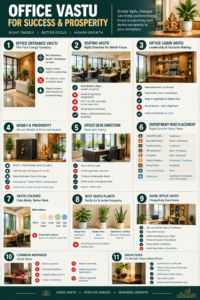
Office Vastu Tips 11 Proven Vastu Shastra Tips
1. Office Entrance Vastu: The First Energy Gateway
The main door is the point where all energy — and all opportunity — enters your workspace.
- Best directions for the main entrance: North, Northeast, or East. These directions are ruled by benefic planets and the Sun, inviting growth, clarity, and financial gains.
- Keep the entrance well-lit, clean, and clutter-free — a dark or blocked entrance restricts the flow of opportunities.
- Avoid placing dustbins, shoe racks, or broken items near the main door.
- The reception desk should ideally face east or north, with the receptionist seated diagonally opposite the entrance so they can see who’s coming in.
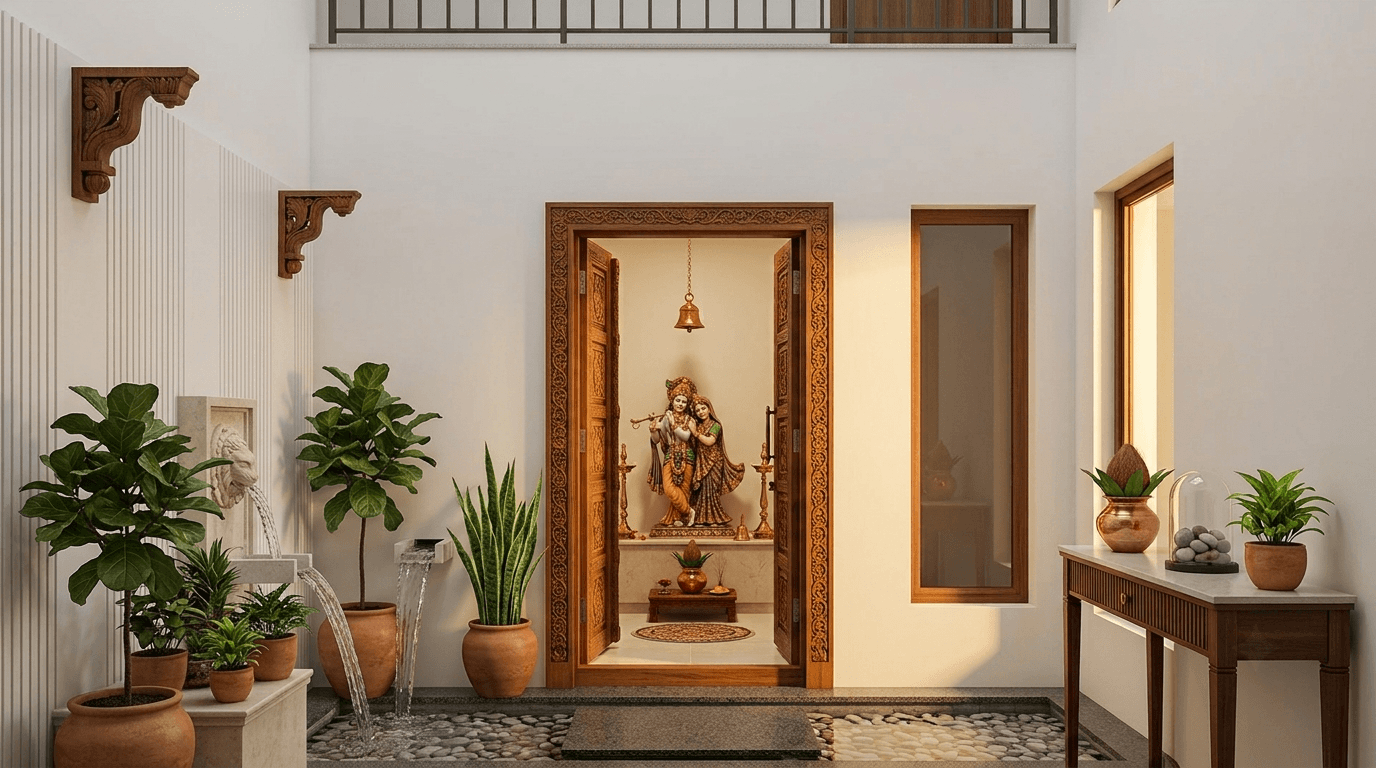
- A small water fountain or fresh flowers near the entrance is considered auspicious for attracting positive energy.
2. Best Direction to Sit in the Office (Seating Vastu)
This is the single most searched office Vastu query — and for good reason, since seating direction is believed to directly affect focus and career growth.
- Employees and general staff: Face North or East while working. North supports financial growth; East boosts clarity, confidence, and positive thinking.
- Avoid facing South while working, as it’s associated with stagnation and reduced energy.
- Never sit with your back to the main door — this creates a subconscious feeling of insecurity and distraction.
- Avoid sitting directly under an exposed beam or sharp ceiling structure, as it’s said to create mental pressure and stress.
- Leave adequate space behind your chair; a wall or solid backing behind you (rather than a window) is considered more stable and supportive.
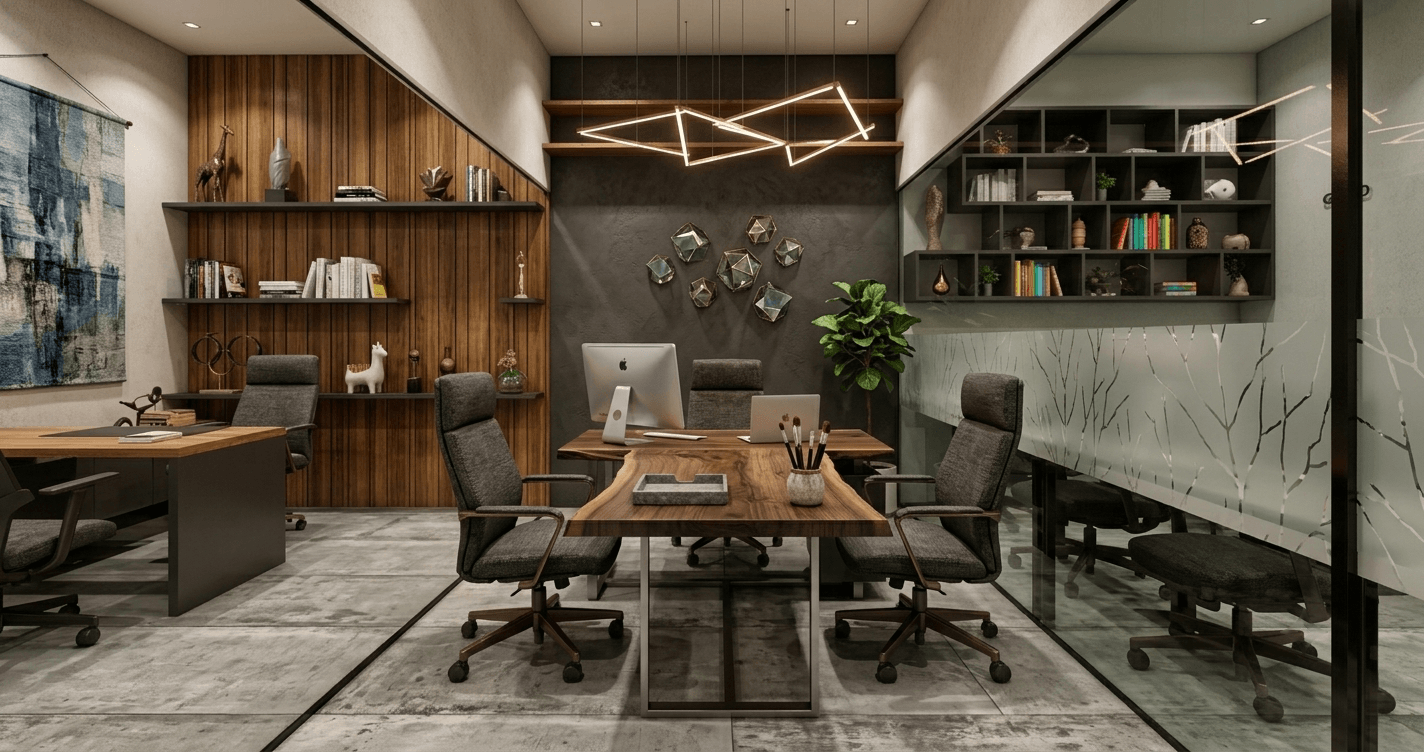
3. Vastu for Office Cabin (Boss/Owner Cabin Placement)
The owner’s or senior leadership’s cabin sets the energy tone for the entire office.
- The ideal direction for the boss’s cabin is Southwest — this zone represents strength, authority, and stability, helping leaders command respect.
- The owner or decision-maker should sit facing North, East, or Northeast while working from this cabin.
- Keep the cabin organised and clutter-free; a heavy, rectangular wooden desk (avoid glass or irregular shapes) is preferred.
- Avoid placing the boss’s chair directly beneath a beam or in line with the door — this can create instability in decision-making.
- A wall or heavy furniture behind the boss’s chair is preferred over an open window, symbolising strong support.
4. Office Vastu for Money & Prosperity
If your goal is financial growth, these are the most important office Vastu tips for money:
- North direction is ruled by Kuber, the Lord of Wealth. Keep this zone open, clean, and clutter-free — ideally used for the cash counter, safe, or financial documents.
- Place the safe or locker facing south so that when opened, it faces north (the direction of wealth) — a widely followed Vastu rule for cash flow.
- Keep the Northeast corner free of storage or heavy furniture; this zone governs new opportunities and financial inflow.
- A small pyramid, Kuber Yantra, or wealth plant (like a money plant) placed in the North or Northeast is believed to enhance prosperity.
- Avoid keeping the cash counter or accounts desk directly facing the entrance, as it can lead to unnecessary financial leakage.
5. Vastu for Office Desk Direction
Desk placement is a practical extension of seating Vastu:
- The desk should ideally be placed so you face north or east while working.
- Avoid placing your desk directly opposite the entrance door or in a straight line with it.
- Prefer rectangular or square desks; irregular shapes are believed to cause delays and confusion.
- Choose wooden desks over glass or metal — wood is considered more grounding and stable as per Vastu.
- Keep your desk clutter-free — stacks of files and broken stationery are said to block the smooth flow of energy (and, practically, reduce focus).
6. Department-Wise Office Vastu Placement
For larger offices, Vastu recommends specific zones for different functions:
| Department/Zone | Recommended Direction | Why |
|---|---|---|
| Owner/MD Cabin | Southwest | Authority & stability |
| Accounts/Finance | North or Northeast | Ruled by Kuber, attracts wealth |
| Marketing/Sales | Northwest | Supports networking & movement |
| HR Department | West or Northwest | Encourages fair decision-making |
| Reception | East or Northeast | Welcomes positive energy |
| Pantry/Cafeteria | Northwest or Southeast | Fire element balance |
| Server/Electronics Room | Southeast | Ruled by Agni (fire element) |
| Conference Room | West | Encourages focused discussion |
| Washrooms | Southwest or Northwest corner (never Northeast) | Prevents energy drain |
7. Vastu Colours for Office Walls
Colour psychology and Vastu align closely here — the right shades can genuinely affect mood and focus:
- Best colours: White, light yellow, cream, light green, and light blue — these promote calm, clarity, and positivity.
- Avoid dark colours like black or dark grey on large wall areas, as they’re believed to absorb positive energy and can visually make a space feel heavier.
- Reception and common areas work well with light, warm tones, while cabins can use subtle accents of green or blue for focus.
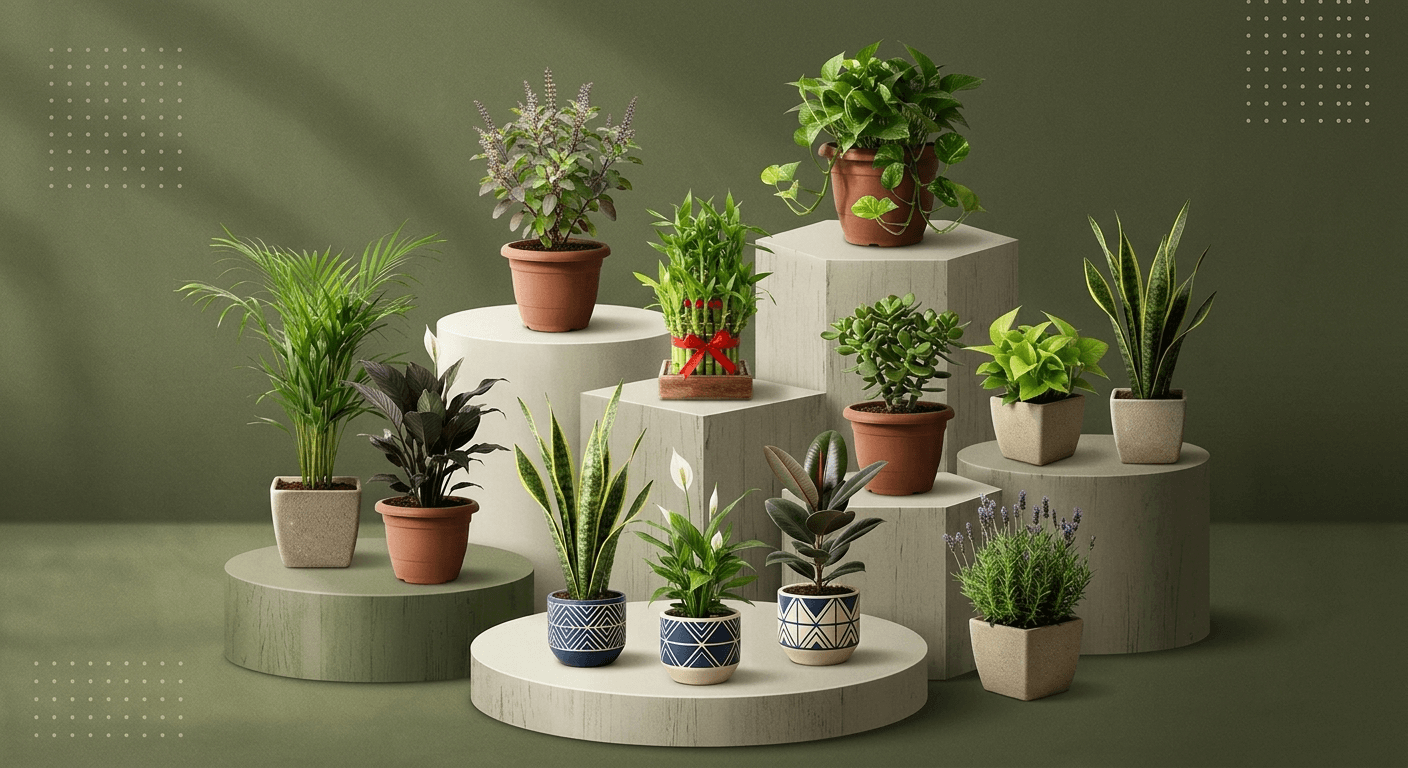
8. Best Vastu Plants for Office
Plants aren’t just decorative — in Vastu, they’re considered energy purifiers.
- Money Plant – place in the Southeast corner to attract wealth and prosperity.
- Bamboo Plant – a symbol of good luck, best placed in the East.
- Snake Plant / ZZ Plant – improves air quality and is best kept near the entrance or workstation.
- Avoid thorny or bonsai plants (like cactus) inside the office, as these are believed to introduce negative or stagnant energy.
9. Vastu Tips for Home Office (Work-From-Home Setup)
With hybrid work now common, home office Vastu has become one of the fastest-growing searches:
- Set up your home office in the North, East, or Northeast portion of your home.
- Your desk should face north or east, with a solid wall behind your chair rather than an open door or window.
- Keep electronic devices like printers and routers in the Southeast corner, as this zone is ruled by the fire element.
- Avoid working directly under a staircase or in a storeroom — these are considered low-energy zones.
- Ensure good natural light and ventilation; a dim, closed room is said to slow down mental clarity and motivation.
10. Common Office Vastu Mistakes to Avoid
- Sitting with your back to the main door
- Keeping the Northeast corner cluttered or heavy with storage
- Irregular-shaped rooms, desks, or office plots
- Toilets located in the Northeast zone
- Overhead beams directly above work desks
- Broken furniture, non-functional clocks, or dead plants left in the workspace
- Mirrors placed directly opposite the main entrance (this is believed to reflect energy back out)
11. Quick Vastu Fixes for Rented or Ready-Made Offices
Not every business can restructure walls or entrances. If your office layout doesn’t match ideal Vastu directions, try these remedies:
- Use mirrors strategically on the north wall to visually “extend” a space and attract positive energy.
- Place a Vastu pyramid or crystal at the centre of the office (Brahmasthan) to balance overall energy.
- Add table lamps or bright lighting in darker corners, especially the Southeast and South zones.
- Introduce indoor plants to counterbalance directions that can’t be structurally changed.
- Keep the centre of the office (Brahmasthan) open and free of heavy pillars or storage wherever possible.
Frequently Asked Questions (FAQs) on Office Vastu
1. Which direction is best for an office main door? North, Northeast, or East are considered the most auspicious directions for an office entrance as per Vastu Shastra.
2. Which direction should I face while working in the office? North or East is recommended for most employees, as these directions are associated with focus, growth, and financial stability.
3. Where should the boss’s cabin be located as per Vastu? The Southwest zone is considered ideal for the boss or owner’s cabin, symbolising authority and stability.
4. What is the best Vastu direction for the cash counter or accounts department? North or Northeast, since these zones are ruled by Kuber, the Lord of Wealth.
5. Can Vastu tips work in a rented office where I can’t change the structure? Yes. Remedies like mirrors, plants, colours, lighting, and decluttering specific zones can help balance energy without structural changes.
6. Which plants are good for office Vastu? Money plant, bamboo, and snake plant are among the most recommended, while thorny plants like cactus should be avoided.
Conclusion
Applying the right office Vastu tips — from entrance direction and seating position to desk placement and colours — can help create a workspace that feels calmer, more organised, and aligned with growth. While Vastu is rooted in tradition, many of its principles (natural light, decluttering, good seating posture, organised layouts) also align with modern workplace wellness and productivity research. Start with small, practical changes like decluttering the Northeast corner, adjusting your seating direction, and adding a few plants — and build from there as your office evolves.
Disclaimer: Vastu Shastra is a traditional belief system. The tips above are shared for informational purposes and should be adapted to practical building constraints and local regulations.