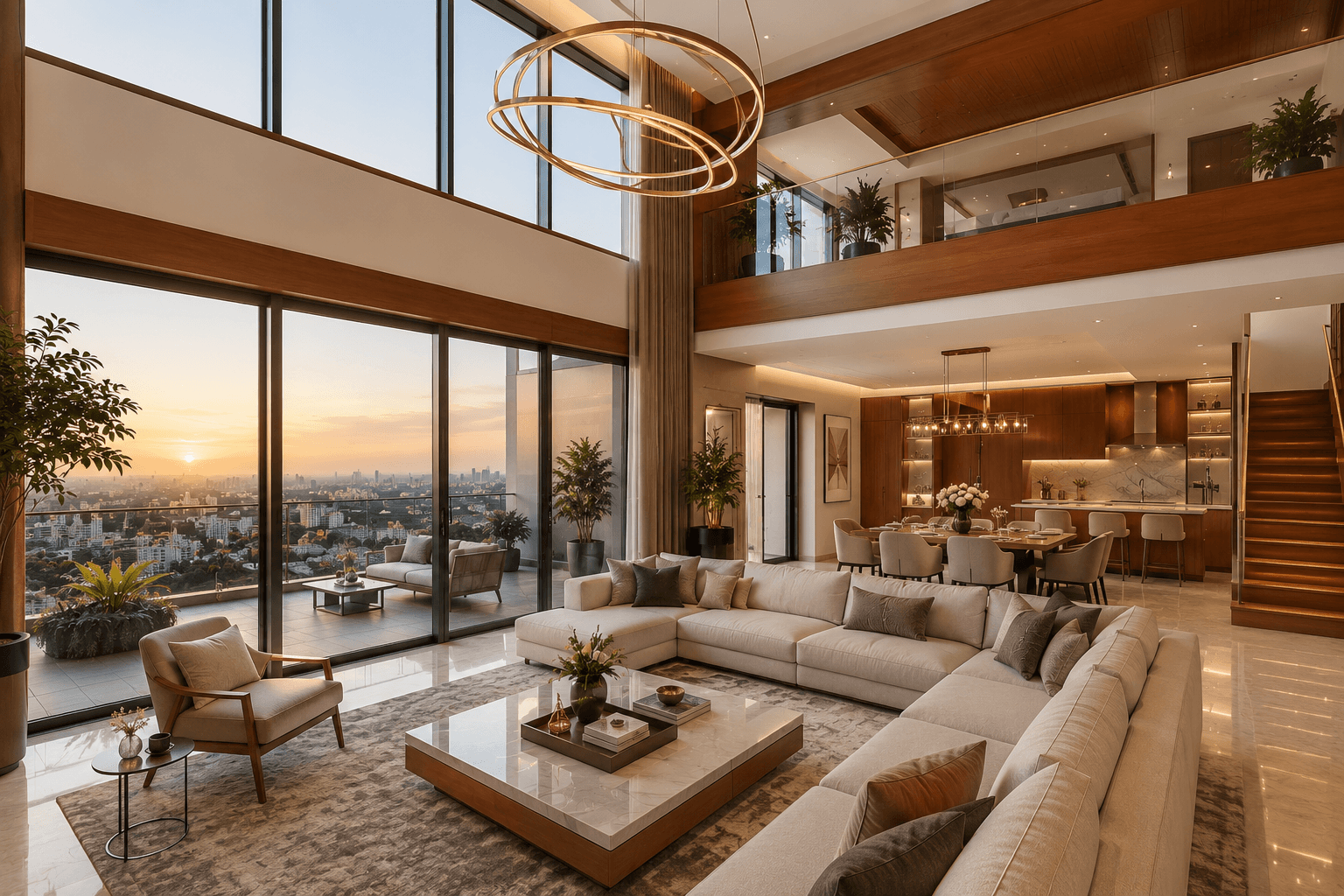
What are the key Vastu interior design tips for a living room in Ahmedabad?
As per Vastu Shastra, the living room in an Ahmedabad home should ideally be in the north, north-east, or east direction of the house to allow maximum natural light and positive energy flow. The sofa should face east or north. The TV unit should be placed on the south-east or east wall. Colours like white, cream, light yellow, and soft green are the most Vastu-compliant choices for living room walls. Avoid clutter, broken items, and dark colours in the living room. A Vastu-compliant living room interior creates positive energy, enhances family harmony, and improves the overall feel of the home — and in Ahmedabad where Vastu is deeply woven into the culture of homebuilding, getting these details right makes a measurable difference.
Why Vastu Interior Design for Living Room Matters in Ahmedabad?
In Ahmedabad and across Gujarat, Vastu Shastra is not just a traditional belief — it is a practical design framework that has guided homebuilding for centuries. From the old pol houses of the walled city to the premium high-rise apartments on SG Highway and Sindhu Bhavan Road, Ahmedabad homeowners consistently prioritise Vastu-compliant interior design when planning their living spaces.
The living room is the most socially important room in any Ahmedabad home. It is where guests are welcomed, family gathers in the evening, festivals are celebrated, and the overall energy of the household is first felt. A living room that is beautifully designed but Vastu-deficient can feel subtly wrong — creating restlessness, disturbed social energy, or a persistent sense that the space does not feel as welcoming as it should.
At Ahmedabad Interior Designer, we have completed over 500 Vastu-compliant home interior projects across Ahmedabad — and the living room is always the space where Vastu alignment has the most visible and immediate impact on how the home feels. This guide covers every Vastu interior design tip for the living room that our team applies on every project, explained clearly so you can apply the principles to your own home.
Best Direction for Living Room as per Vastu — Ahmedabad Homes
Which direction is best for a living room as per Vastu Shastra?
The north, north-east, and east directions are the best positions for a living room as per Vastu Shastra. These directions receive the maximum natural morning light, promote positive energy flow into the home, and align with Vastu’s principle that social and welcoming spaces should face the direction of incoming energy and prosperity. In Ahmedabad’s residential layouts — whether 2BHK and 3BHK flats in Bopal and Gota or villas in Shilaj and Shela — the north-east and east-facing living rooms consistently feel the most open, bright, and inviting.
- North-facing living room Vastu: The north direction is associated with Kuber, the god of wealth and prosperity in Vastu Shastra. A north-facing living room is considered highly auspicious for financial growth and positive social energy. Keep the north wall light, open, and free from heavy furniture or storage. Ahmedabad Interior Designer recommends soft blue, green, or white for north-facing living room walls to complement the directional energy.
- East-facing living room Vastu: The east direction is governed by Lord Indra and is associated with comfort, success, and morning solar energy. An east-facing living room receives direct morning sunlight, which is considered the most positive form of natural energy in Vastu. Light yellow, cream, and white are the most recommended colours for east-facing living rooms in Ahmedabad.
- North-east living room Vastu: The north-east direction — known as Ishan in Vastu — is considered the most spiritually powerful corner of any home. A north-east living room should be kept clean, light, and clutter-free. Avoid heavy furniture, dark colours, or storage units in the north-east zone of your living room.
- West-facing living room Vastu Ahmedabad: West-facing living rooms are common in many Ahmedabad residential developments. While not the first-choice direction in Vastu, a west-facing living room can be corrected and enhanced through strategic interior design — using lighter colours, mirrors on the north wall, and Vastu-approved decor elements to redirect positive energy flow. Ahmedabad Interior Designer has completed numerous Vastu correction projects for west-facing living rooms across Ahmedabad’s apartment complexes.
- South-facing living room Vastu: South-facing living rooms require the most Vastu correction work. The south direction is associated with Yama in Vastu and is considered less ideal for social gathering spaces. However, with the right interior design approach — specific colour choices, furniture placement, and Vastu remedies — a south-facing living room in any Ahmedabad flat or villa can be made fully harmonious and welcoming.
Vastu Colours for Living Room in Ahmedabad — Complete Guide
What is the best colour for a living room as per Vastu Shastra?
As per Vastu Shastra, the best colours for a living room are white, cream, light yellow, soft green, and pale blue. These colours promote positive energy, encourage open and warm social interaction, and create a calm and welcoming atmosphere. In Ahmedabad’s bright, sunlit homes, these Vastu-recommended colours also work beautifully with natural light — making spaces feel larger, brighter, and more premium.
- White and off-white living room — Vastu: White and off-white are universally Vastu-compliant for living rooms in any direction. They reflect light, create a sense of space, and provide a neutral, positive canvas for any interior style. For Ahmedabad homes with smaller living areas — common in 2BHK flats in Chandkheda, Naroda, and Nikol — white and off-white Vastu colours are both scientifically and spiritually the best choice.
- Light yellow living room — Vastu: Yellow is one of the most auspicious Vastu colours for living rooms facing east or north-east. It represents positivity, mental clarity, and welcoming energy — qualities directly aligned with the purpose of a living room. In Ahmedabad’s interior design tradition, soft yellow living room walls are a classic choice that combines Vastu compliance with a warm, inviting aesthetic.
- Soft green living room — Vastu: Green represents growth, harmony, and natural energy in Vastu Shastra. It is the recommended colour for north and north-east facing living rooms, aligning with the water and growth energy of those directions. Sage green, mint, and olive are popular Vastu-compliant living room colours in premium residential projects across Ahmedabad’s Prahlad Nagar, Bodakdev, and Satellite zones.
- Light blue living room — Vastu: Blue is associated with water, calm, and prosperity in Vastu Shastra and is recommended for north-facing living rooms. Muted, soft blue tones — not dark navy or royal blue — create a serene, spacious feel that works especially well in Ahmedabad’s larger 3BHK and 4BHK living rooms.
- Beige and cream living room — Vastu: Beige and cream are among the most practically popular Vastu-compliant living room colours in Ahmedabad. They are neutral, easy to work with across furniture styles, and create a warm, grounded energy that suits the Gujarati preference for understated but premium home interiors.
- Colours to avoid in living room as per Vastu: Dark colours including black, dark grey, deep red, and dark brown should be avoided as dominant wall colours in the living room as per Vastu. These colours suppress positive energy flow, create heaviness in the social atmosphere, and are not recommended as primary colours for any living room wall in an Ahmedabad home. They can however be used as accent colours in small quantities — cushion covers, decor accessories, or a single accent shelf — without causing Vastu imbalance.
Vastu Furniture Placement for Living Room — Ahmedabad Homes
Where should furniture be placed in a living room as per Vastu?
Furniture placement is one of the most practically impactful aspects of Vastu interior design for the living room. At Ahmedabad Interior Designer, we follow a clear set of Vastu furniture placement principles on every living room project — and the difference in how a room feels before and after correct Vastu placement is immediately noticeable.
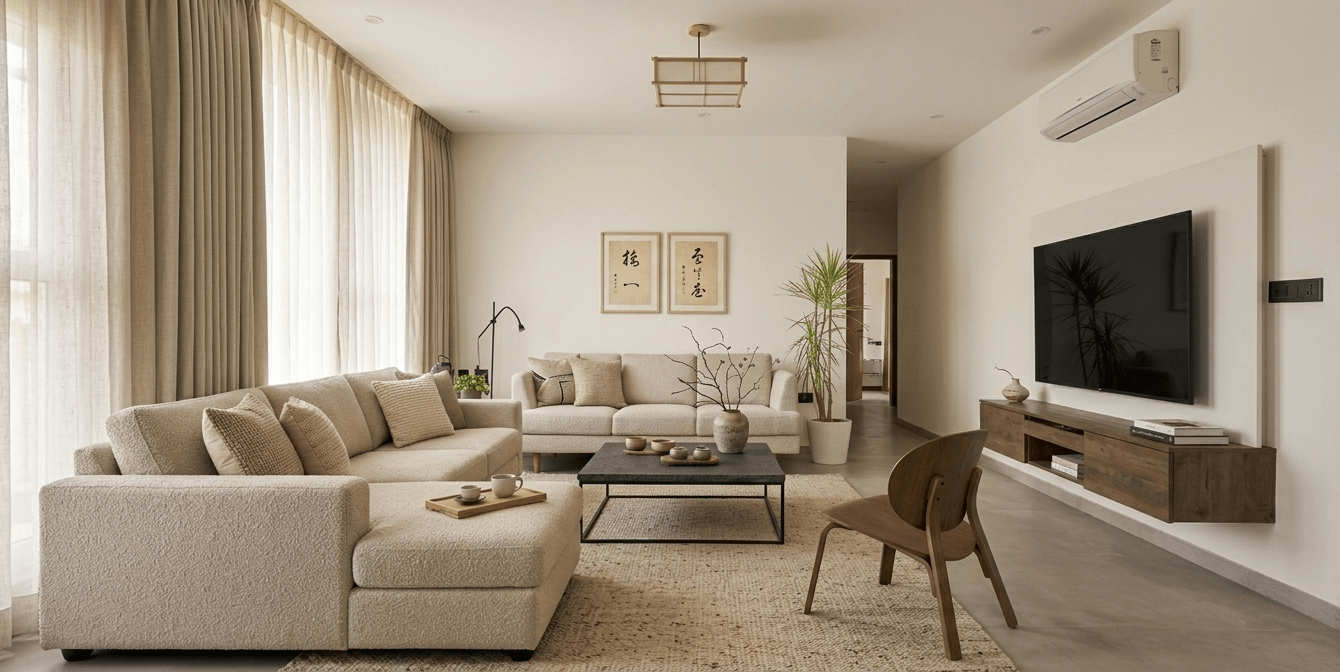
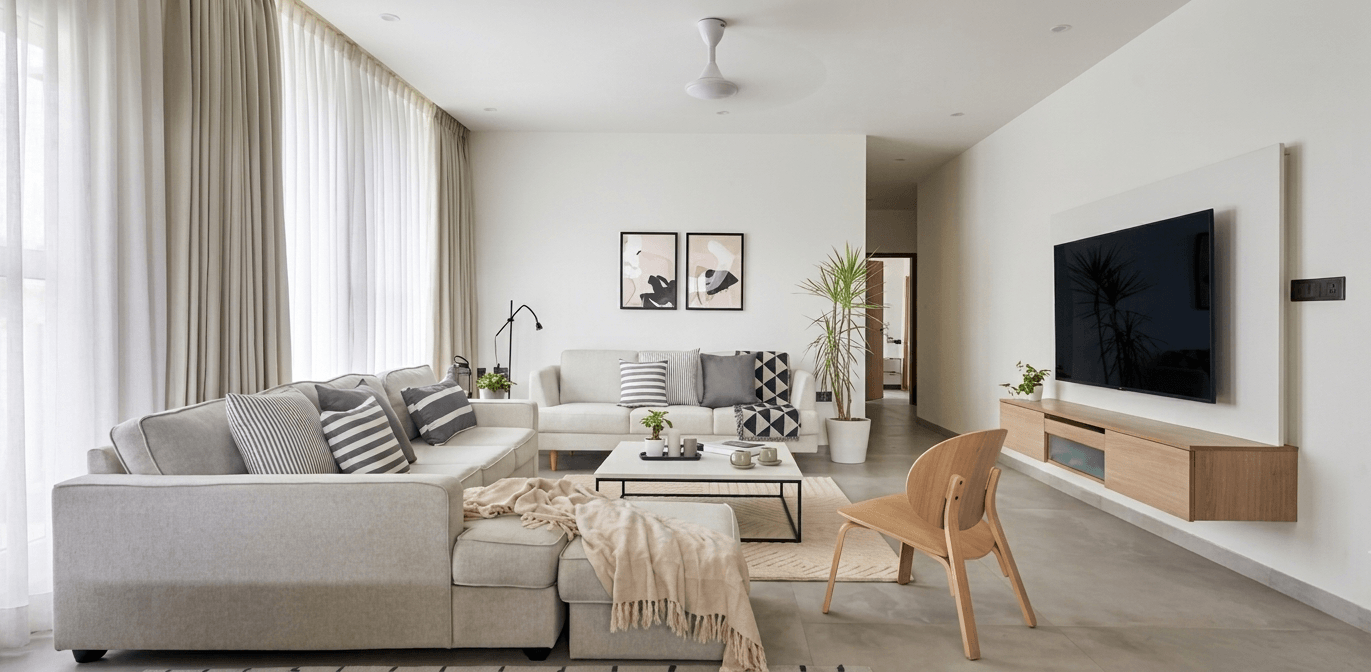
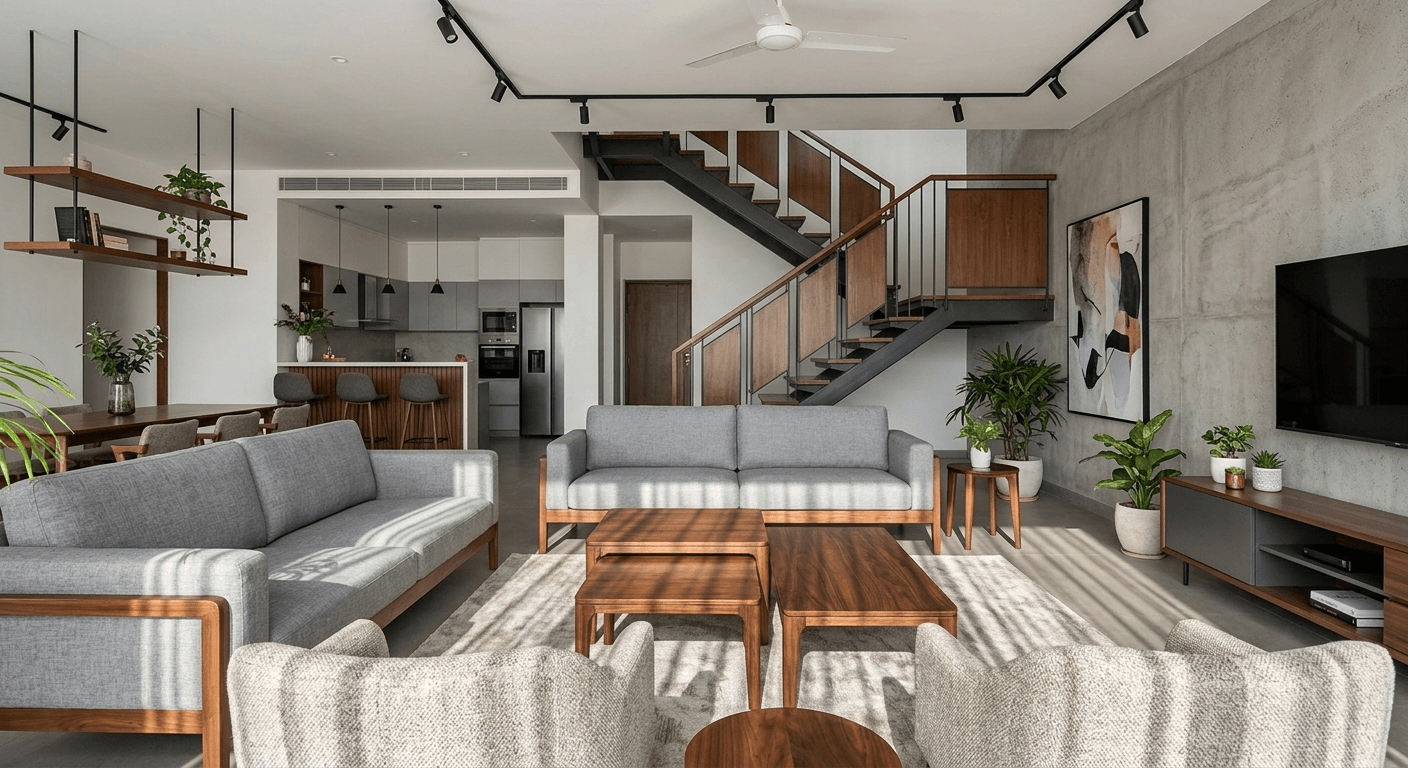
- Sofa placement as per Vastu living room: The sofa should be placed against the south or west wall of the living room, with the seating direction facing north or east. This means the person seated is facing east or north — the most auspicious directions for social interaction in Vastu Shastra. Avoid placing the sofa directly against the north or east wall, as this blocks the incoming positive energy from those directions. In Ahmedabad’s typical rectangular living rooms, an L-shaped sofa with the longer section against the south wall and shorter section against the west wall naturally follows Vastu principles while maximising seating capacity.
- TV unit placement as per Vastu living room: The TV unit should be placed on the south-east or east wall of the living room as per Vastu. This positions the television in the fire zone of the home, which is considered the correct placement for electronic devices in Vastu Shastra. When seated facing the TV, the viewer should ideally be facing east or north. Avoid placing the TV unit on the north-east wall — this is the most spiritually sensitive zone of the room and should remain open and clean.
- Centre table placement as per Vastu: The centre table in a living room should be square or rectangular in shape as per Vastu — not irregular, oval, or with sharp corners pointing toward seating areas. Place it centrally in front of the sofa with adequate space for movement around all sides. A wooden centre table is the most Vastu-compliant material choice for living rooms in Ahmedabad homes.
- Heavy furniture and storage as per Vastu: All heavy furniture including bookshelves, display units, large cabinets, and storage units should be placed on the south or west walls of the living room. Never place heavy furniture in the north-east corner — this is considered the most harmful Vastu error in living room interior design and creates blocked, stagnant energy in the space.
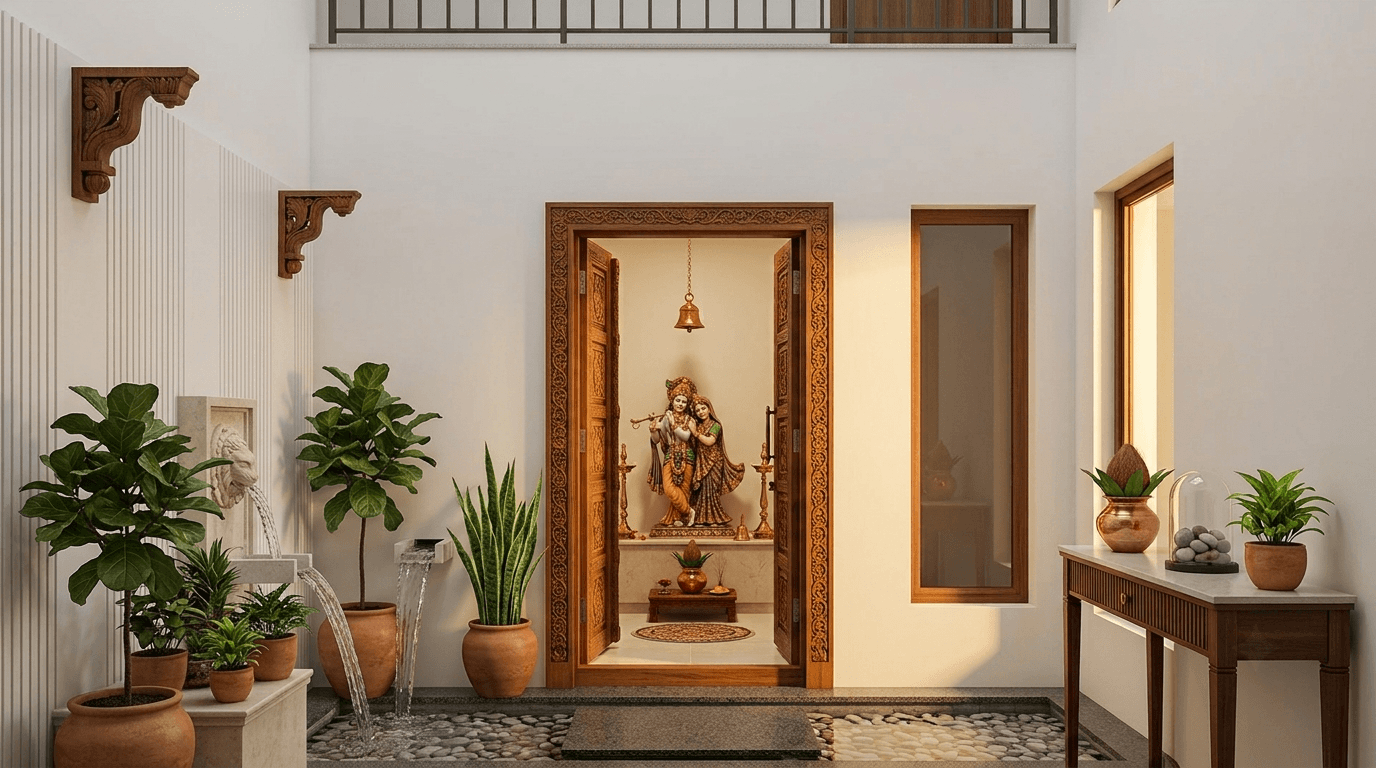
- Entrance and main door Vastu for living room: The main door of the living room should open clockwise and ideally face north, east, or north-east. The entrance area should be well-lit, clutter-free, and welcoming. Ahmedabad Interior Designer recommends a small decorative element — a fresh flower arrangement, a Ganesh idol, or a brass lamp — near the living room entrance to mark the transition into the home’s social space as positive and auspicious.
Vastu for Living Room Mirrors in Ahmedabad Homes
Where should mirrors be placed in a living room as per Vastu?
Mirrors are one of the most powerful Vastu correction tools in living room interior design — when placed correctly they amplify positive energy, and when placed incorrectly they reflect and multiply negative energy.
The north and east walls are the best positions for mirrors in a living room as per Vastu. A mirror on the north wall reflects the energy of Kuber — the direction of wealth — and is considered highly auspicious for financial prosperity. A mirror on the east wall reflects morning sunlight into the room, amplifying the positive solar energy throughout the space.
Never place a mirror directly facing the main entrance of the living room — this is considered a major Vastu defect as it reflects positive energy back out of the home as it enters. Never place a mirror directly facing the sofa — this creates a doubling of energy that can cause restlessness and social tension in the living room environment.
In Ahmedabad Interior Designer’s living room projects, we use large decorative mirrors on the north wall as a design element that simultaneously serves as a Vastu correction tool — combining aesthetic value with energetic alignment.
Vastu for Living Room Lighting in Ahmedabad Homes
What is the best lighting for a living room as per Vastu Shastra?
Lighting is a critically important Vastu element in living room interior design — and it is one of the most searched Vastu topics by Ahmedabad homeowners planning new interiors. As per Vastu Shastra, the living room should always be brightly and evenly lit. Dark corners, poorly lit zones, and heavy shadows in a living room are considered Vastu defects that create stagnant, negative energy in the space.
- Natural lighting Vastu tips for living room: Maximise natural light from north and east-facing windows in the living room. Keep window areas free from heavy drapes or obstructions that block incoming daylight. In Ahmedabad’s sunny climate — with over 300 days of sunshine annually — north and east-facing windows are a significant natural Vastu asset that should never be blocked.
- Artificial lighting Vastu tips for living room: Use warm white LED lighting (colour temperature 2700K–3000K) for the living room ceiling and cove lighting. Warm tones align with Vastu’s preference for light that mimics natural sunlight energy. Avoid blue-tinted cool white LEDs in the living room — these create a clinical, cold atmosphere that works against the welcoming, warm energy Vastu prescribes for social gathering spaces.
- False ceiling lighting Vastu for living room Ahmedabad: False ceilings are extremely popular in Ahmedabad living room designs. From a Vastu perspective, the false ceiling should not have a beam running directly over the seating area — this is considered a Vastu pressure point that creates stress for the people sitting beneath it. Cove lighting in the false ceiling perimeter is a Vastu-compliant approach that provides diffused, warm, even light throughout the living room.
- Centre light Vastu for living room: A central chandelier or decorative ceiling light directly above the centre of the living room — not off-centre — is the most Vastu-compliant main light placement. Ensure the centre light is positioned symmetrically in relation to the room’s geometry. Odd-numbered light clusters are considered more auspicious than even-numbered groupings in Vastu Shastra.
Vastu Plants for Living Room in Ahmedabad Homes
Which plants are good for the living room as per Vastu?
Indoor plants are one of the most recommended Vastu elements for living room interior design — they bring natural energy, improve air quality, and represent growth and prosperity when placed correctly.
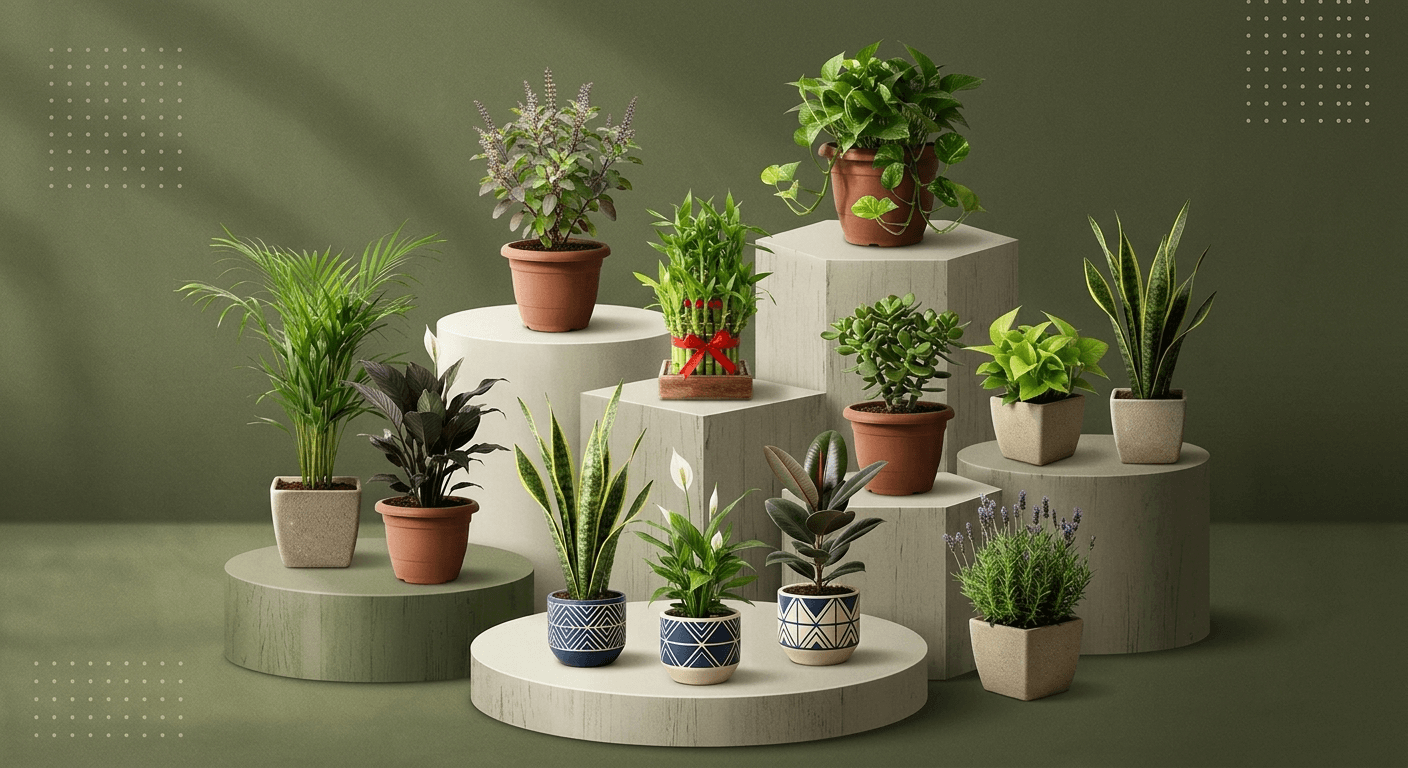
The most Vastu-recommended plants for living rooms in Ahmedabad homes include money plant, peace lily, bamboo plant, snake plant, and tulsi (when placed near east or north-east windows). These plants are associated with positive energy, financial prosperity, and emotional well-being in Vastu Shastra — and they also thrive beautifully in Ahmedabad’s warm climate.
Money plant in the living room should be placed in the south-east direction as per Vastu — this is the fire zone associated with financial energy and the money plant’s growth is considered most auspicious in this placement. Bamboo plants should be placed in the east or north direction for maximum positive Vastu effect.
Plants to avoid in the living room as per Vastu: Cactus and thorny plants should not be kept inside the living room — their sharp edges are considered energetically aggressive in Vastu and are believed to create conflict in social spaces. Bonsai trees are also generally avoided in living room Vastu as they represent stunted growth. Milk-producing or latex plants with white sap should be kept outside the living room as per Vastu Shastra.
Vastu Decor and Artwork for Living Room — Ahmedabad Homes
What should be kept in the living room as per Vastu Shastra?
Decor and artwork are deeply important in Vastu interior design for the living room. Every object placed in a living room carries energy — and Vastu Shastra provides clear guidance on what enhances positive energy and what should be avoided.
- Vastu-compliant decor for living room: Images and artwork depicting nature, flowing water, mountains, sunrise, blooming flowers, birds in flight, and positive landscapes are considered highly Vastu-compliant for living room walls. These images promote abundance, movement, positivity, and harmony in the social energy of the space. Ganesh idols and Laxmi imagery placed in the north or east zone of the living room are auspicious decor choices for Ahmedabad homes with a traditional Gujarati design sensibility.
- Vastu artwork to avoid in living room: Images depicting violence, battle scenes, weeping figures, solitary animals, or scenes of suffering should never be displayed in the living room as per Vastu. Artwork depicting a single bird or lone animal is considered an indicator of isolation and loneliness and should be replaced with imagery showing pairs or groups. At Ahmedabad Interior Designer, we guide every client on artwork and decor selection as part of our complete Vastu interior design service — ensuring that every object in the living room contributes positively to the overall energy of the space.
- Vastu for TV in living room: The television screen, when not in use, acts as a mirror in Vastu terms — reflecting energy back into the room. Position the TV so that it does not directly reflect the main entrance or the sofa seating area. A TV cabinet with a shutter or panel that covers the screen when not in use is both a premium design choice and a Vastu-compliant solution — one that Ahmedabad Interior Designer recommends in many luxury living room projects.
Vastu Corrections for Living Room — Common Vastu Defects in Ahmedabad Flats
Many Ahmedabad homeowners live in flats and apartments where the living room direction and layout were determined by the builder — not by Vastu principles. This is extremely common in residential developments across Chandkheda, Naroda, Vastral, Nikol, and Gota. The good news is that Vastu interior design can correct most living room Vastu defects without any structural changes — using strategic furniture placement, colour choices, mirrors, lighting, and decor.
- Vastu correction for south-facing living room: Use light, warm colours on all walls. Place a mirror on the north wall to draw Kuber’s wealth energy into the space. Use a bright entry light at the main living room entrance. Keep the south-west corner weighted with heavy furniture to stabilise the directional energy.
- Vastu correction for heavy beam over seating area: If a structural beam runs over the living room seating area — a very common issue in older Ahmedabad apartment buildings — install a false ceiling that covers and conceals the beam. This neutralises the Vastu pressure point completely. Ahmedabad Interior Designer regularly addresses this specific Vastu defect with false ceiling solutions in renovation projects across Ahmedabad’s residential zones.
- Vastu correction for irregular shaped living room: Many modern Ahmedabad flats have L-shaped or irregular living rooms due to open-plan layouts. Use furniture placement and area rugs to define a clear, rectangular social zone within the irregular space. The defined seating zone should respect Vastu directional principles even if the overall room shape is irregular.
- Vastu correction for north-east clutter: The north-east corner of the living room should always be the cleanest, lightest, and most open zone in the room. If existing furniture or storage is placed in the north-east — a common layout error in builder-specified interiors — relocate it to the south or west side and replace it with a small indoor plant, a lamp, or leave the corner completely open.
Room-by-Room Vastu Summary for Living Room — Ahmedabad Homes
| Vastu Element | Recommended as per Vastu | Avoid as per Vastu |
|---|---|---|
| Best direction for living room | North, North-East, East | South, South-West |
| Best wall colours | White, cream, light yellow, soft green, pale blue | Black, dark grey, dark red, dark brown |
| Sofa placement | South or west wall, facing north or east | North-east wall, facing south |
| TV unit placement | South-east or east wall | North-east wall |
| Mirror placement | North or east wall | Facing main entrance, facing sofa |
| Heavy furniture | South or west wall | North-east corner |
| Main entrance | North, east, or north-east, opens clockwise | South-west, opens anticlockwise |
| Best indoor plants | Money plant, bamboo, peace lily, snake plant | Cactus, bonsai, thorny plants |
| Best lighting | Warm white, bright and even, central ceiling light | Cool blue-white LEDs, dark corners |
| Centre table shape | Square or rectangular, wooden | Irregular shapes, sharp-cornered glass |
| Artwork and decor | Nature, flowing water, birds, sunrise, Ganesh | Violence, lone animals, sad imagery |
Frequently Asked Questions — Vastu Interior Design for Living Room in Ahmedabad
Which direction is best for a living room as per Vastu Shastra?
North, north-east, and east are the best directions for a living room as per Vastu Shastra. These directions receive the most natural morning light and are associated with wealth, prosperity, and positive incoming energy. In Ahmedabad homes, a north or east-facing living room is considered highly auspicious and is the most sought-after layout in premium residential developments across SG Highway, Bodakdev, and Prahlad Nagar.
What colour is best for a living room as per Vastu in Ahmedabad?
White, cream, light yellow, soft green, and pale blue are the best colours for a living room as per Vastu Shastra in Ahmedabad. These colours promote positive energy, create a welcoming social atmosphere, and work beautifully with Ahmedabad’s bright natural light. Avoid dark colours like black, deep grey, and dark red as dominant living room wall colours as they suppress positive energy flow.
Where should the sofa be placed in a living room as per Vastu?
The sofa should be placed against the south or west wall of the living room as per Vastu Shastra, with the seating facing north or east. This ensures the occupants are facing the most auspicious directions during social interaction. Avoid placing the sofa against the north-east wall — this blocks the incoming positive energy from the home’s most spiritually important directional zone.
Where should the TV unit be placed in a living room as per Vastu?
The TV unit should be placed on the south-east or east wall of the living room as per Vastu. This positions electronic devices in the fire zone of the home, which is the correct Vastu placement for all heat and electricity generating items. The viewer seated opposite the TV should ideally face east or north. Avoid placing the TV on the north-east wall.
What should not be kept in a living room as per Vastu?
As per Vastu Shastra, the following should not be kept in a living room — broken or non-functional items, clutter of any kind, cactus and thorny plants, artwork depicting violence or solitary sad figures, dark-coloured heavy furniture in the north-east corner, and mirrors directly facing the main entrance. A clean, bright, and clutter-free living room is the single most important Vastu compliance factor for any Ahmedabad home.
How to correct Vastu dosh in a living room without renovation?
Most living room Vastu defects in Ahmedabad flats can be corrected without structural changes. Repaint walls in Vastu-compliant colours. Relocate heavy furniture from the north-east to the south or west. Place a mirror on the north wall. Add a money plant in the south-east corner. Install warm white LED lighting to eliminate dark zones. Cover any exposed beams with a false ceiling. These Vastu correction measures can be implemented as part of an interior design update by Ahmedabad Interior Designer without any civil or structural work.
Which plants are good for the living room as per Vastu?
Money plant, bamboo plant, peace lily, and snake plant are the best Vastu-compliant indoor plants for a living room in Ahmedabad. Money plant placed in the south-east direction is associated with financial growth. Bamboo in the east or north direction promotes positive energy and progress. Avoid cactus, bonsai, and thorny plants inside the living room as they are considered energetically aggressive in Vastu Shastra.
Is a west-facing living room good as per Vastu?
A west-facing living room is not the first choice in Vastu Shastra but is not a serious Vastu defect either. With the right interior design approach — warm Vastu-compliant colours, a mirror on the north wall, correct furniture placement, and good lighting — a west-facing living room in an Ahmedabad flat or villa can be made fully Vastu-compliant and harmonious. Ahmedabad Interior Designer specialises in Vastu correction for west and south-facing living rooms across Ahmedabad’s residential zones.
What is the importance of Vastu for living room interior design in Gujarat?
In Gujarat and Ahmedabad specifically, Vastu Shastra is deeply embedded in the culture of homebuilding and interior design. Homeowners, builders, and developers across Ahmedabad consistently prioritise Vastu compliance in new home projects and interior renovations. A Vastu-compliant living room creates positive social energy, enhances family harmony, improves the sense of welcome for guests, and — in Ahmedabad’s highly Vastu-aware real estate market — adds measurable resale and rental value to a property.
Modern Vastu Interior Design for Living Room — The Ahmedabad Interior Designer Approach
One of the most common concerns we hear from homeowners across Ahmedabad is whether following Vastu principles will compromise the modern, contemporary look they want for their living room. The answer, based on 500+ projects across Ahmedabad and Gujarat, is a clear no.
Modern Vastu interior design is not about rigid rules or compromising aesthetics — it is about aligning the functional, spatial, and energetic principles of Vastu with the visual language of contemporary design. Ahmedabad Interior Designer’s approach to Vastu interior design for living rooms integrates direction-based furniture placement, Vastu-compliant colour palettes, and energetically aligned decor choices seamlessly within modern, minimalist, and luxury interior styles.
A north-facing living room in a premium apartment on SG Highway can be simultaneously Vastu-perfect and design-magazine-worthy. A south-facing living room in a Bopal villa can be Vastu-corrected and still achieve a stunning contemporary interior result. The key is working with an experienced Vastu interior designer in Ahmedabad who understands both the traditional principles and the modern design vocabulary — and who can translate one into the other without compromise.
Plan Your Vastu-Compliant Living Room Interior With Ahmedabad Interior Designer
If you are planning a new living room interior, renovating your existing living room, or need Vastu correction for your current space, Ahmedabad Interior Designer offers free home consultations across Ahmedabad and Gujarat.
Our Vastu interior design service for living rooms covers directional assessment, colour selection, furniture layout planning, lighting design, decor guidance, and complete turnkey interior execution — all aligned with Vastu Shastra principles and delivered in a modern, contemporary design language suited to Ahmedabad’s premium residential lifestyle.
We serve all areas of Ahmedabad including SG Highway, Satellite, Bodakdev, Prahlad Nagar, Vastrapur, Navrangpura, Bopal, Shela, Shilaj, Chandkheda, Naroda, Gota, Thaltej, Mani Nagar, Vastral, and Nikol — and across Gujarat including Surat, Vadodara, Rajkot, Gandhinagar, and Anand.